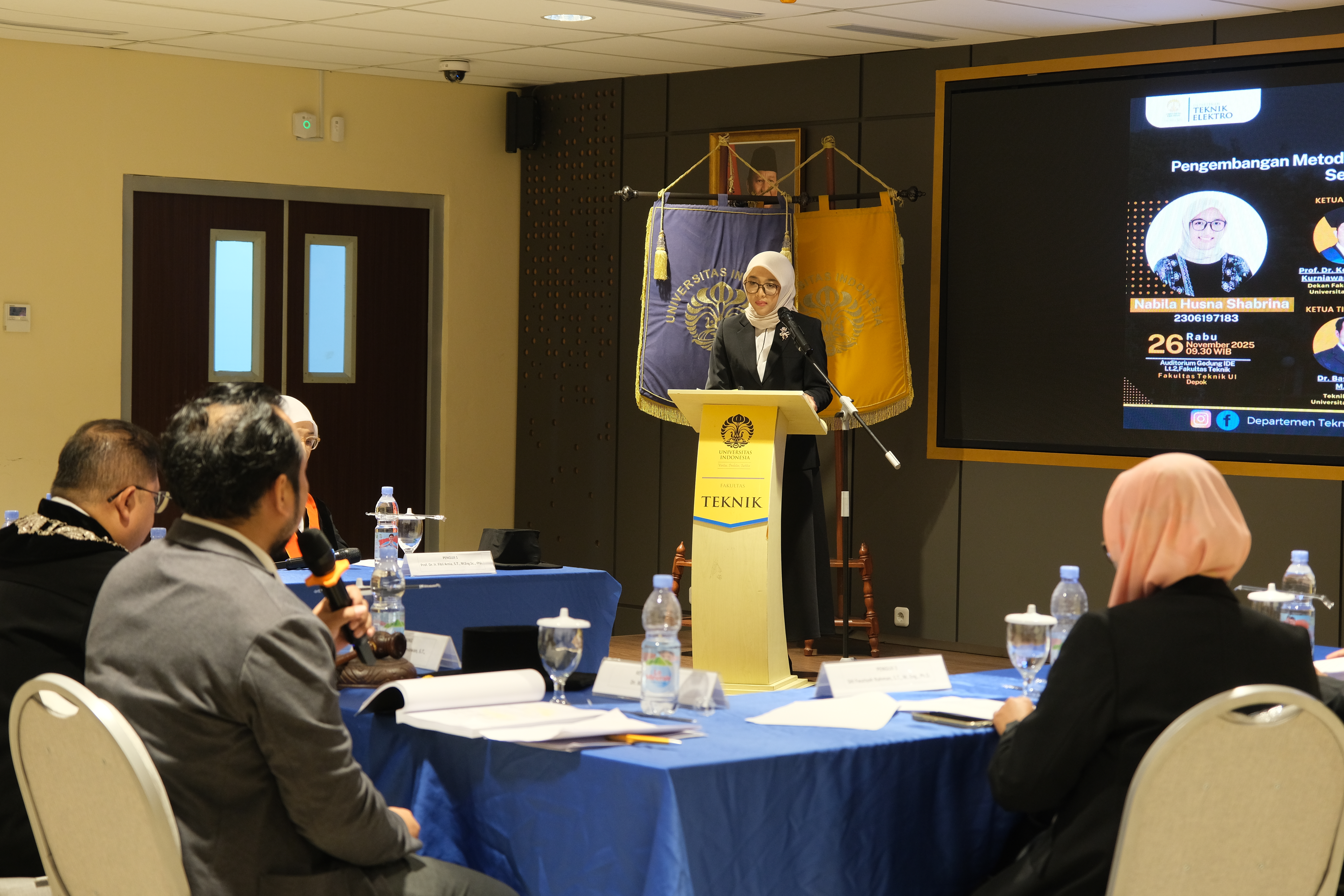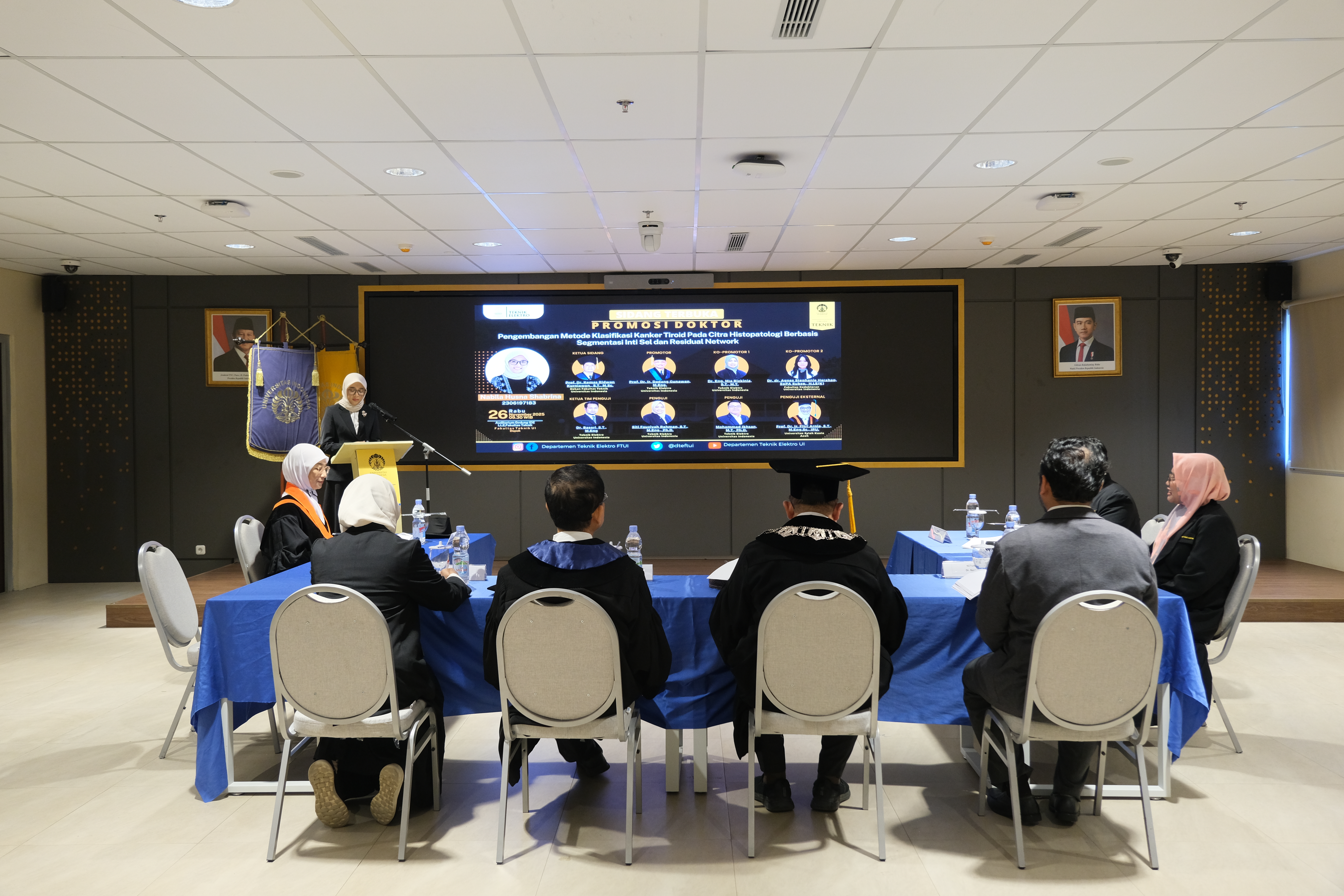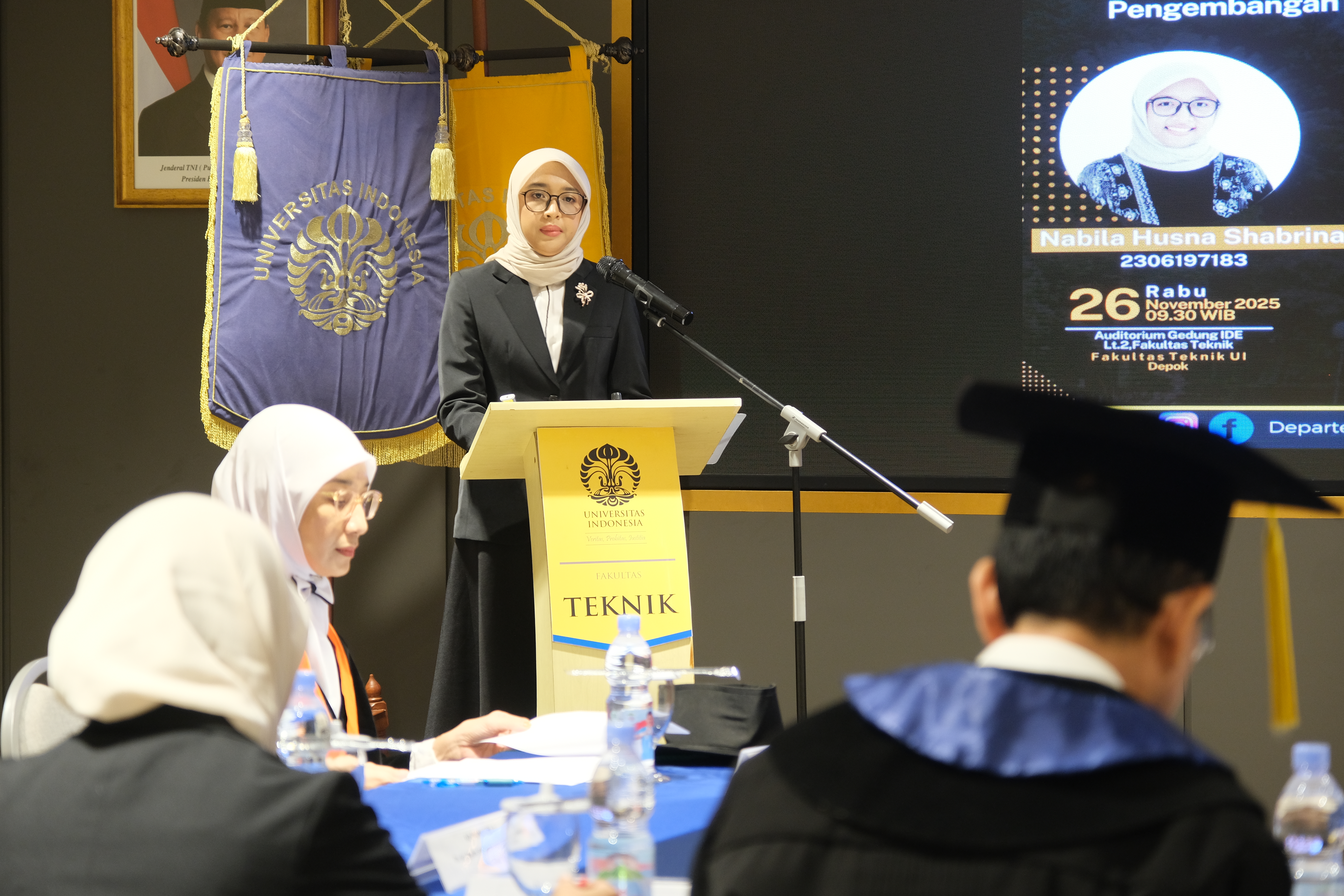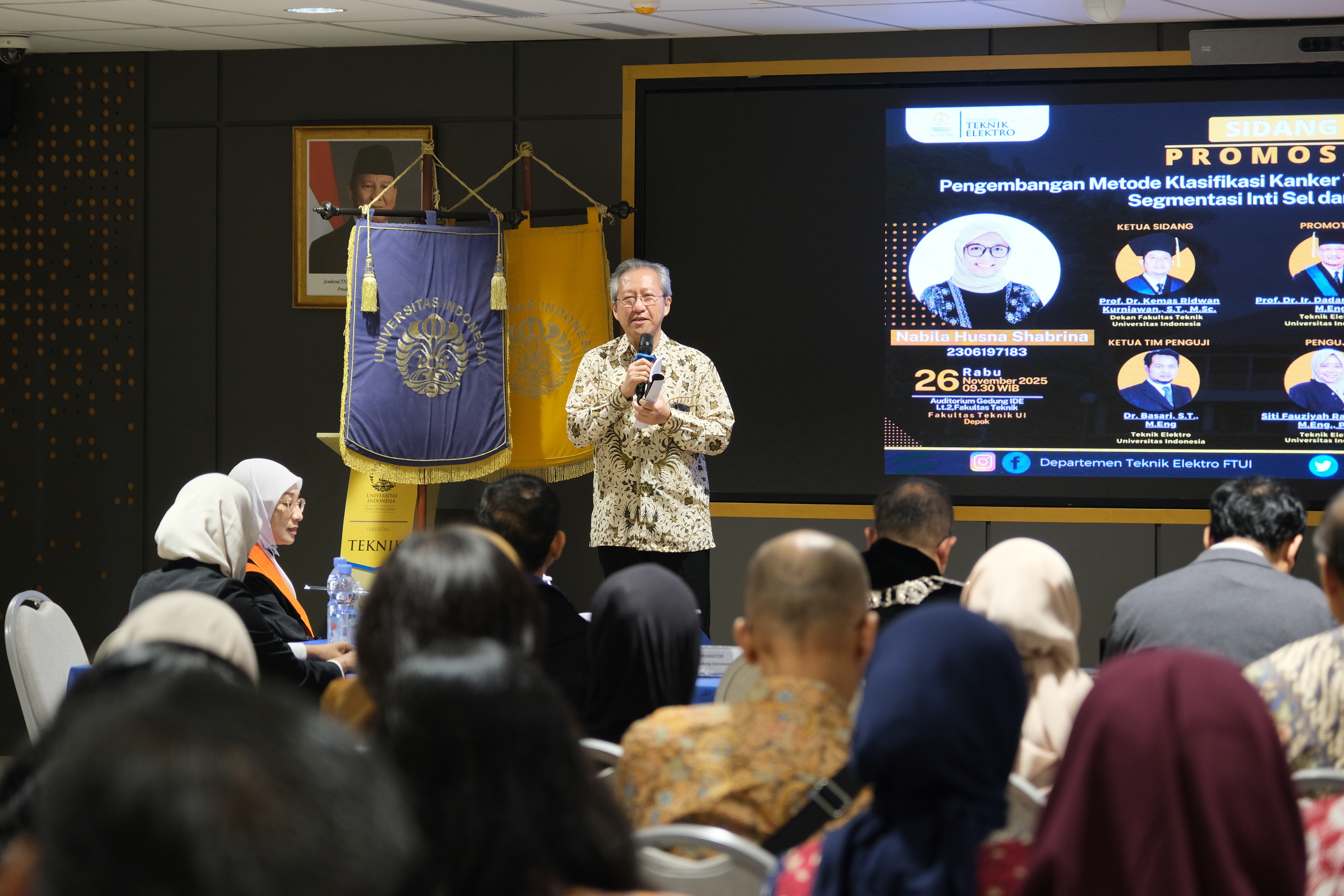
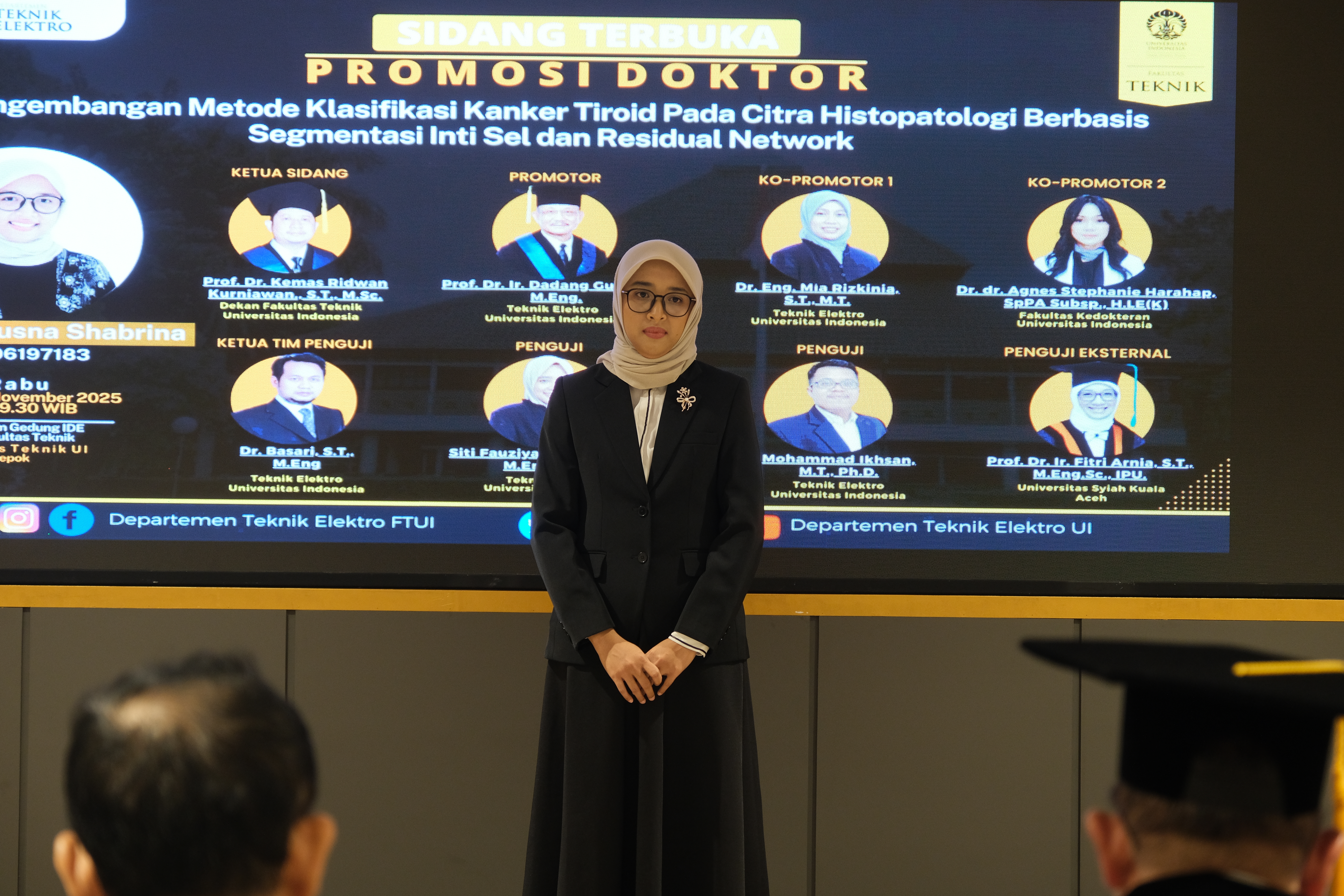
Nabila Husna, a doctoral candidate from the Department of Electrical Engineering, Faculty of Engineering Universitas Indonesia (FTUI), has completed her doctoral studies with a GPA of 3.95, earning the distinction of Summa Cum Laude. She is recorded as the 188th doctoral graduate from the Department of Electrical Engineering and the 626th doctoral graduate at FTUI, following her open doctoral defense held on Wednesday (26/11).
In her dissertation, Nabila presented a new approach by integrating StarDist-based cell nuclei segmentation with the Residual Network (ResNet-50) architecture to enhance the accuracy of thyroid cancer diagnosis. Her dissertation is titled “Development of a Thyroid Cancer Classification Method in Histopathology Images Based on Cell Nuclei Segmentation and Residual Network.”
“Thyroid cancer is one of the cancer types that has shown a significant rise in incidence over the past three decades. Standard diagnosis still relies on histopathological examination, but conventional methods face challenges such as the limited number of pathologists, inter-observer variability, and lengthy analysis times. AI-based innovations present a major opportunity to support faster and more accurate diagnostic processes,” explained Nabila during her presentation.
Her research addresses the limitations of conventional histopathology diagnosis, which is often time-consuming, highly dependent on the availability of expert pathologists, and susceptible to inconsistent assessments.
“Unlike many previous studies that typically classify only between benign and malignant tissues, this research specifically highlights the importance of distinguishing PTC-like and non-PTC-like groups, which exhibit different biological behaviors and metastatic patterns. By utilizing cell nuclei segmentation—a key component used by pathologists in sample evaluation—the developed model can focus more precisely on critical diagnostic areas and produce richer morphological representations,” Nabila continued.
The results demonstrated exceptionally high performance, achieving 98.55% accuracy, 98.55% sensitivity, and 98.84% specificity in internal testing, with consistent performance across multiple external datasets including TCGA, Nikiforov, and primary datasets from the Department of Anatomical Pathology at FKUI–RSCM.
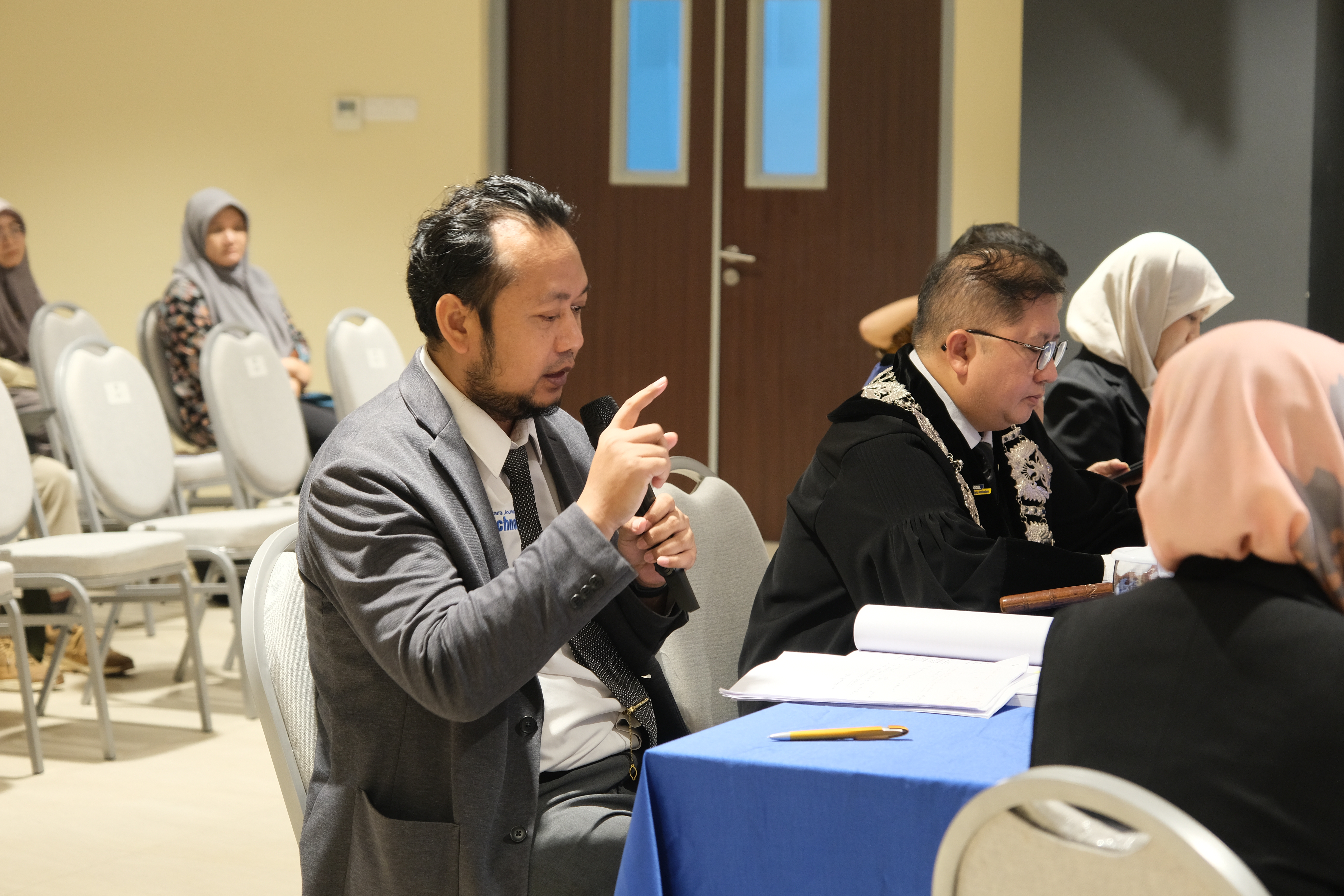
During the doctoral defense, the Chair of the Examination Committee, Prof. Kemas Ridwan Kurniawan, S.T., M.Sc., Ph.D., expressed high appreciation for the research’s contributions. He stated:
“This dissertation demonstrates how artificial intelligence can be integrated with clinical understanding to create more precise diagnostic tools. Incorporating cell nuclei segmentation into deep learning models is a significant step that moves us closer to reliable AI-based medical practice. This is a valuable contribution to both academia and the health sector.”
This research not only offers scientific breakthroughs but also opens promising opportunities for developing more accurate computer-aided diagnostic systems that can be implemented in various medical institutions, including those in Indonesia. It underscores the importance of collaboration between engineering, medicine, and AI to improve healthcare services and support faster, more accurate, and reliable clinical decision-making.
The research was presented in the open doctoral defense chaired by Prof. Dr. Kemas Ridwan Kurniawan, S.T., M.Sc., with Prof. Dr. Ir. Dadang Gunawan, M.Eng. as the supervisor, and Dr.Eng. Mia Rizkinia, S.T., M.T. and Dr. dr. Agnes Stephanie Harahap, SpPA, Subsp. H.L.E.(K), Ph.D. as co-supervisors. The examination committee consisted of Siti Fauziyah Rahman, S.T., M.Eng., Ph.D.; Mohammad Ikhsan, M.T., Ph.D.; and Prof. Dr. Ir. Fitri Arnia, S.T., M.Eng.Sc., IPU.
***
Public Communication Office
Faculty of Engineering, Universitas Indonesia