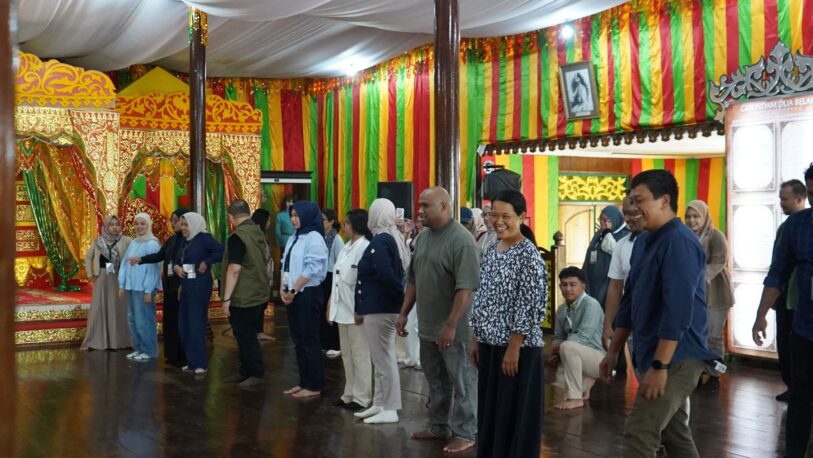
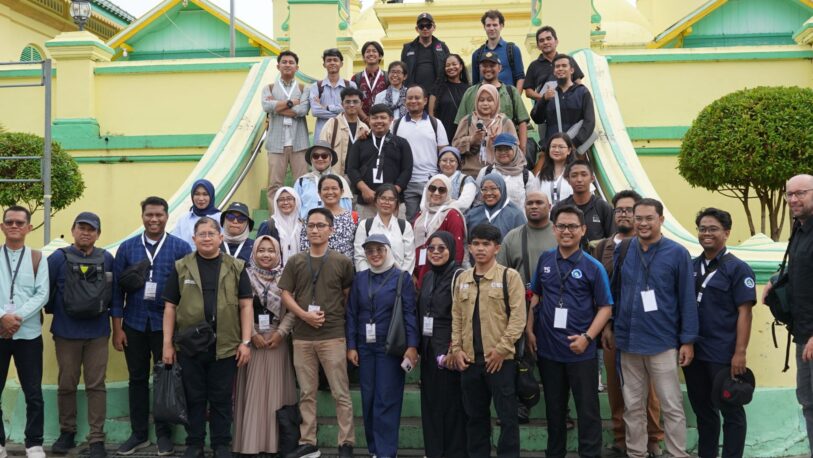
Universitas Maritim Raja Ali Haji (UMRAH) Tanjungpinang officially opened the International Workshop on Historic Urban Landscape (HUL), a global collaborative program involving Universitas Indonesia (UI), IPB University, Universitas Trisakti, Universitas Brawijaya, and international partners from the Netherlands: the Cultural Heritage Agency of the Netherlands (RCE), the Dutch Centre for Intangible Cultural Heritage (KIEN), and Heritage Hands On.
The opening ceremony and public lecture took place on Sunday (30/11) at the Galeri Tamadun Maritim, Gedung Satu Gurindam UMRAH Dompak, marking the beginning of a series of activities running until 4 December 2025. The program focuses on documenting and mapping intangible heritage in the historic areas of Tanjungpinang, particularly Kota Lama (Chinatown) and Penyengat Island.
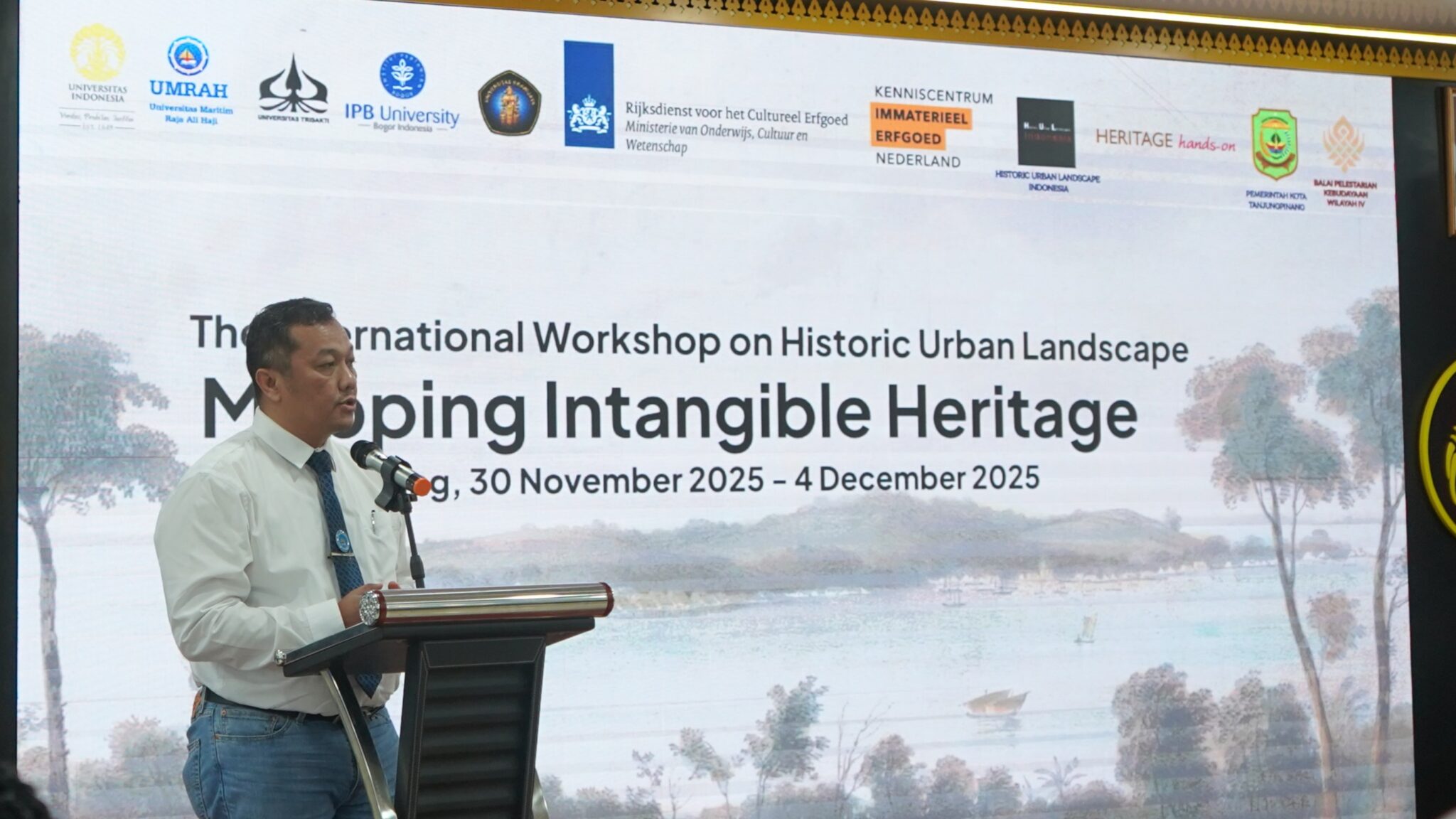
During the opening session, Dean of FTUI, Prof. Kemas Ridwan Kurniawan, S.T., M.Sc., Ph.D., representing the collaborator team, delivered an initial report and expressed his appreciation to UMRAH as the host institution.
Prof. Kemas acknowledged UMRAH’s excellent facilities and the significant efforts of the local committee in bringing together multiple academic institutions and international partners in a unified forum dedicated to strengthening cultural heritage preservation.
He also introduced the composition of the collaborator team, which includes international experts such as Peter Timmer and Jerome (RCE), Sherlien (KIEN), as well as mentors from partner universities: Dr. Vera Damayanti (IPB University), Punto Wijayanto, M.T. (Universitas Trisakti), and Khairul (Universitas Brawijaya).
“This synergy brings together academics, researchers, and practitioners from diverse institutional backgrounds. Together with UMRAH and our Dutch partners, we are committed to uncovering and safeguarding the cultural heritage of Tanjungpinang,” said Prof. Kemas, who concluded his report with a traditional pantun as a tribute to the Malay pantun tradition recognized as an UNESCO Intangible Cultural Heritage.
UMRAH Rector, Prof. Dr. Agung Dhamar Syakti, S.Pi., DEA, officially opened the workshop. In his remarks, he expressed UMRAH’s pride in becoming the “home” for this international academic collaboration.
UMRAH positions the Riau Archipelago as a Living Laboratory, a place where academics and researchers can study the adaptation and cultural resilience of maritime communities.
“The intangible heritage of the Riau Archipelago is a rich cultural data resource. The presence of collaborators from UI, IPB, Trisakti, Brawijaya, and the Netherlands strengthens in-depth research on maritime cultural history,” said Prof. Agung.
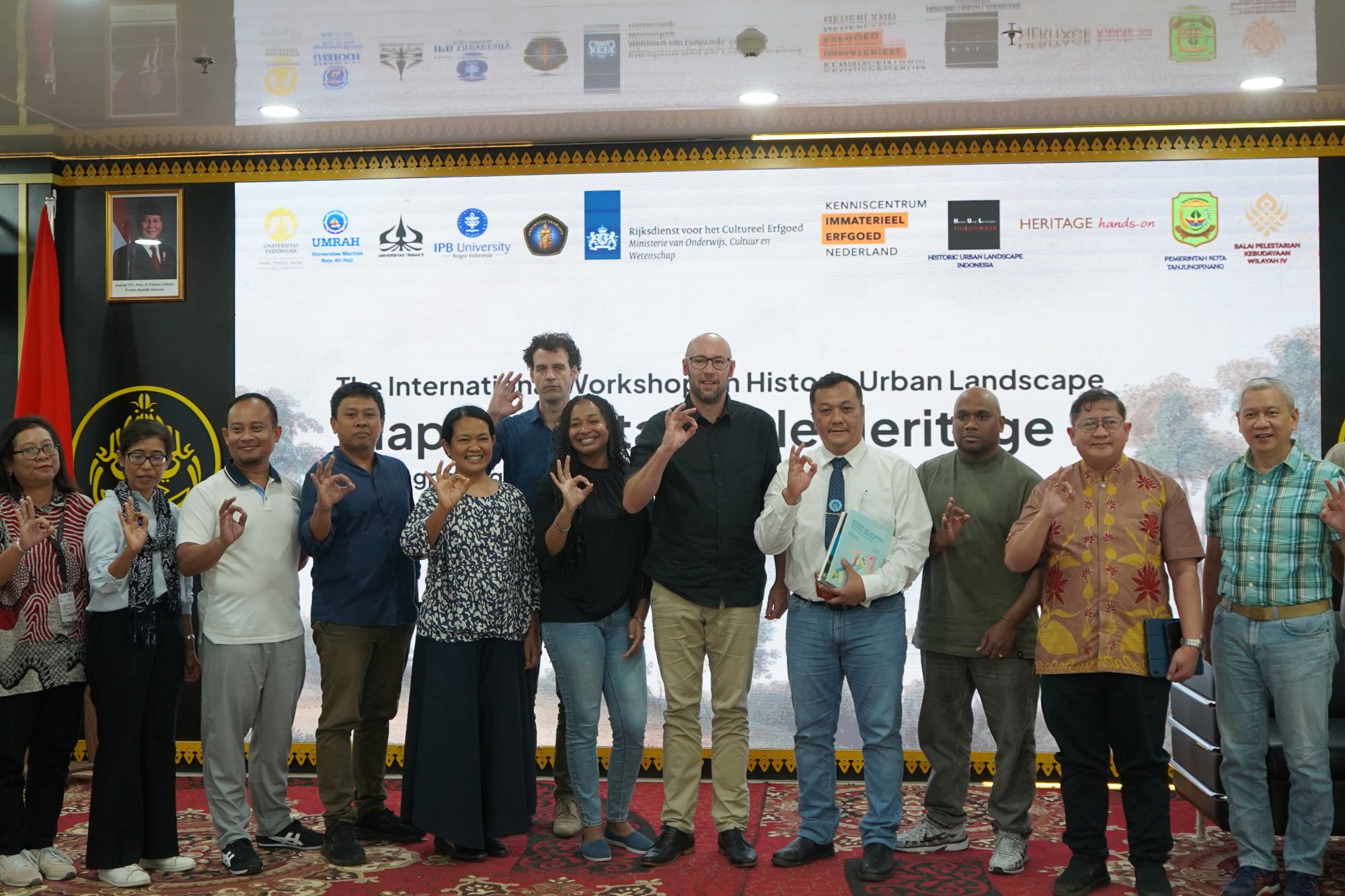
Workshop participants—students and researchers from all collaborating institutions—were divided into four working groups. Throughout the program, they will conduct field observations and map intangible cultural heritage in two main locations:
- Kota Lama (Chinatown area)
- Penyengat Island
The synergy between UMRAH’s local perspectives and the diverse academic backgrounds of the participants enables a multidisciplinary knowledge exchange—from history, architecture, and urban planning to environmental studies and cultural research.
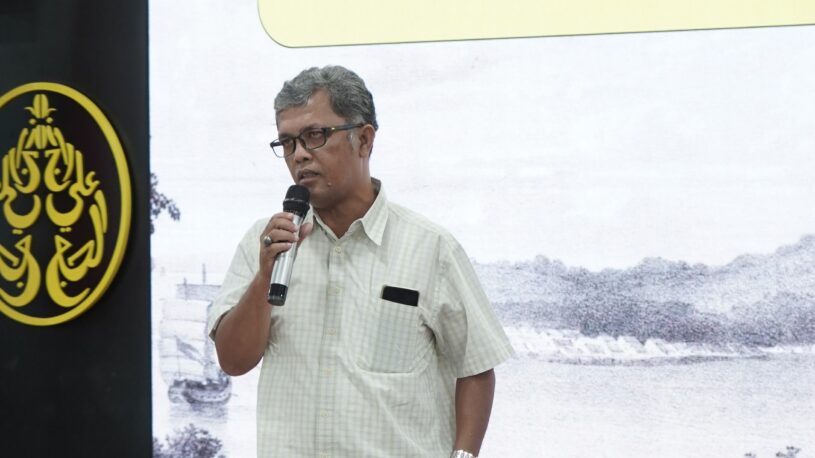
As an academic foundation, UMRAH presented renowned historian Aswandi Syahri in a public lecture titled “Tanjungpinang: The Beginning as a City.” He traced ancient maps from the 1700s to the 1820s to explain the city’s morphological development.
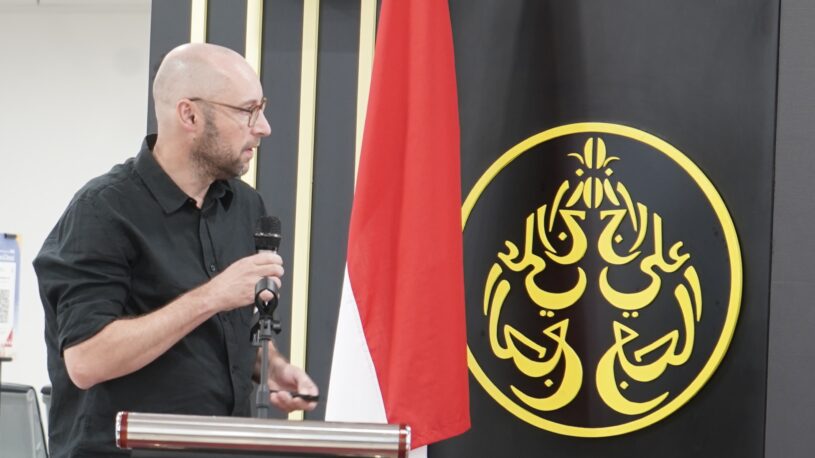
Additionally, Peter Timmer (RCE Netherlands) delivered a reflective session on the Historic Urban Landscape methodology as a conceptual framework before fieldwork.
In the afternoon, participants conducted a Quick Scan of Penyengat Island and Kota Lama—an initial mapping phase before deeper exploration of intangible heritage in the following days.
FTUI’s involvement in this international workshop demonstrates the faculty’s commitment to strengthening global academic collaboration—particularly in cultural heritage preservation, multidisciplinary approaches, and the application of technical knowledge for the sustainability of historic areas.
***
Public Communications Office
Faculty of Engineering, Universitas Indonesia