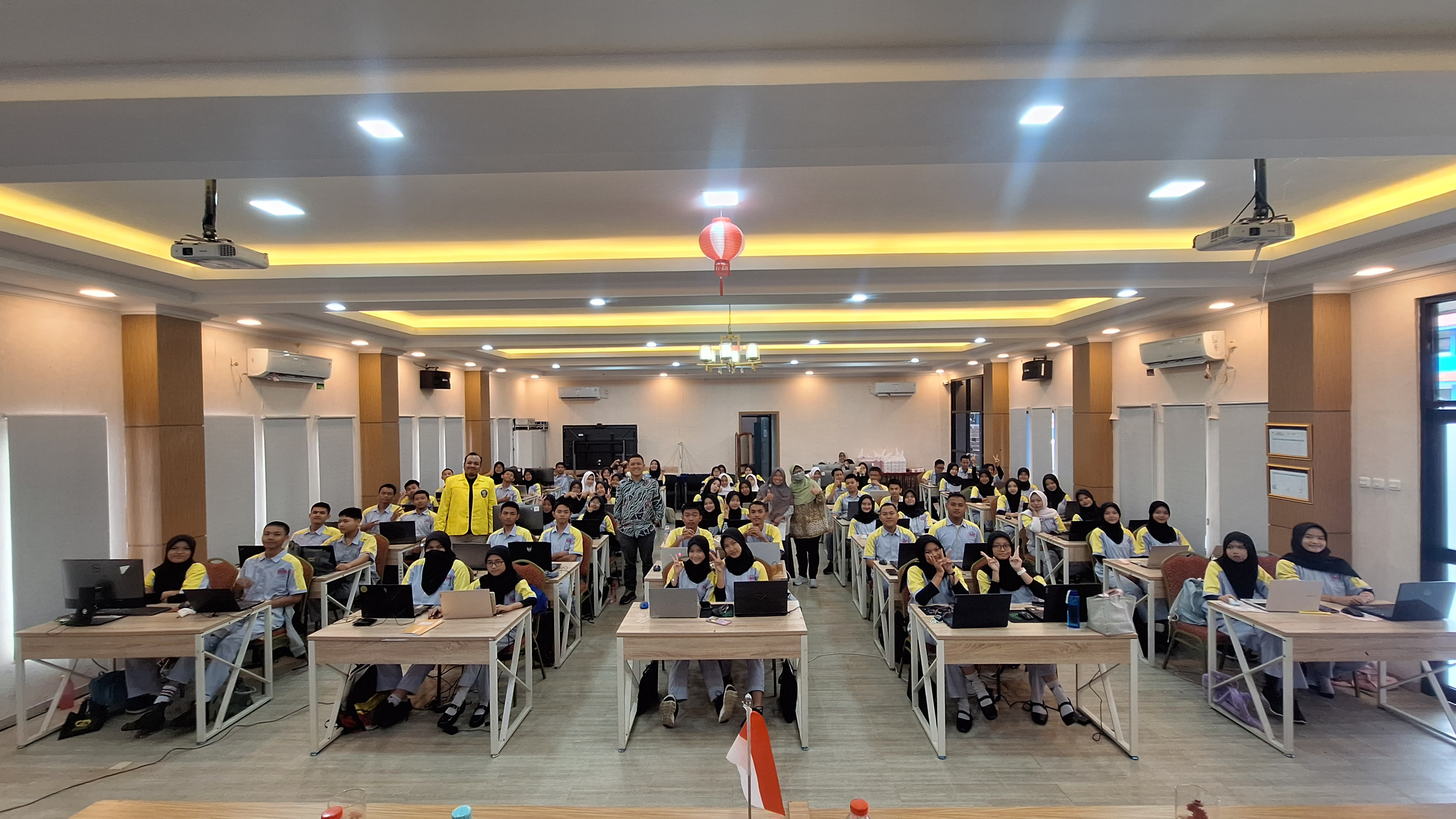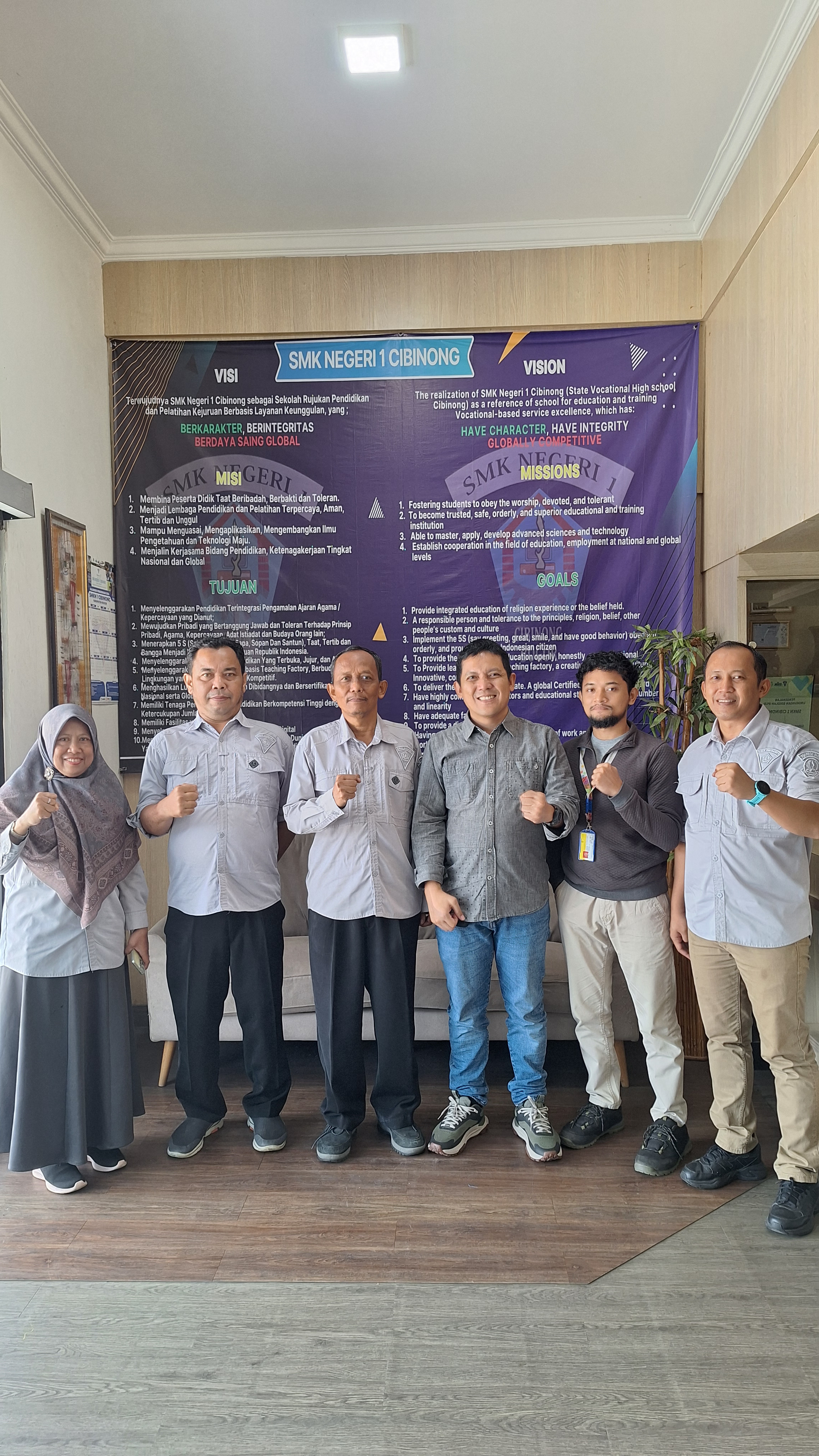

Cibinong – The high rate of workplace accidents in the construction sector calls for a significant transformation in Indonesia’s vocational education curriculum. Responding to this urgency, a community service team from Universitas Indonesia (UI) successfully organized a Community Engagement Program for 70 students of Building Modeling and Information Design (DPIB) at SMKN 1 Cibinong.
This activity represents a tangible form of support from the Directorate of Research and Community Engagement, Directorate General of Research and Development, Ministry of Higher Education, Science, and Technology, funded under the 2025 Fiscal Year.
The three-day training program (10–12 November) focused on integrating 3D Building Information Modelling (BIM) with Occupational Health and Safety (OHS) planning—an essential competency required by Industry 4.0.
The Head of the Implementation Team, Dr. Ir. Rossy Armyn Machfudiyanto, S.T., M.T., IPM, ASEAN Eng., from the Department of Civil and Environmental Engineering at the Faculty of Engineering, UI, explained that there is a significant gap between conventional teaching materials in schools and actual industry standards. “We observe a paradox where schools already have advanced laboratories, yet OHS and design materials are still taught separately. Our goal is to instill a digital safety culture from an early stage. We want students not only to draw, but to construct virtual buildings with full awareness of the risks involved,” said Dr. Rossy.
Three-Day Method and Hazard Detection Game
The training was designed using a Project-Based Learning approach supported by UI student facilitators (including Muhammad Yahya Alfandi Tuasikal, Muhamad Farauk Al Farizi, Vicky Hidajat Effendi, and Adam Mawarji). The three-day method was structured into three critical stages:
- Day One: Onboarding and standardization of the digital workflow.
- Day Two: 3D structural element modeling and production of construction drawings.
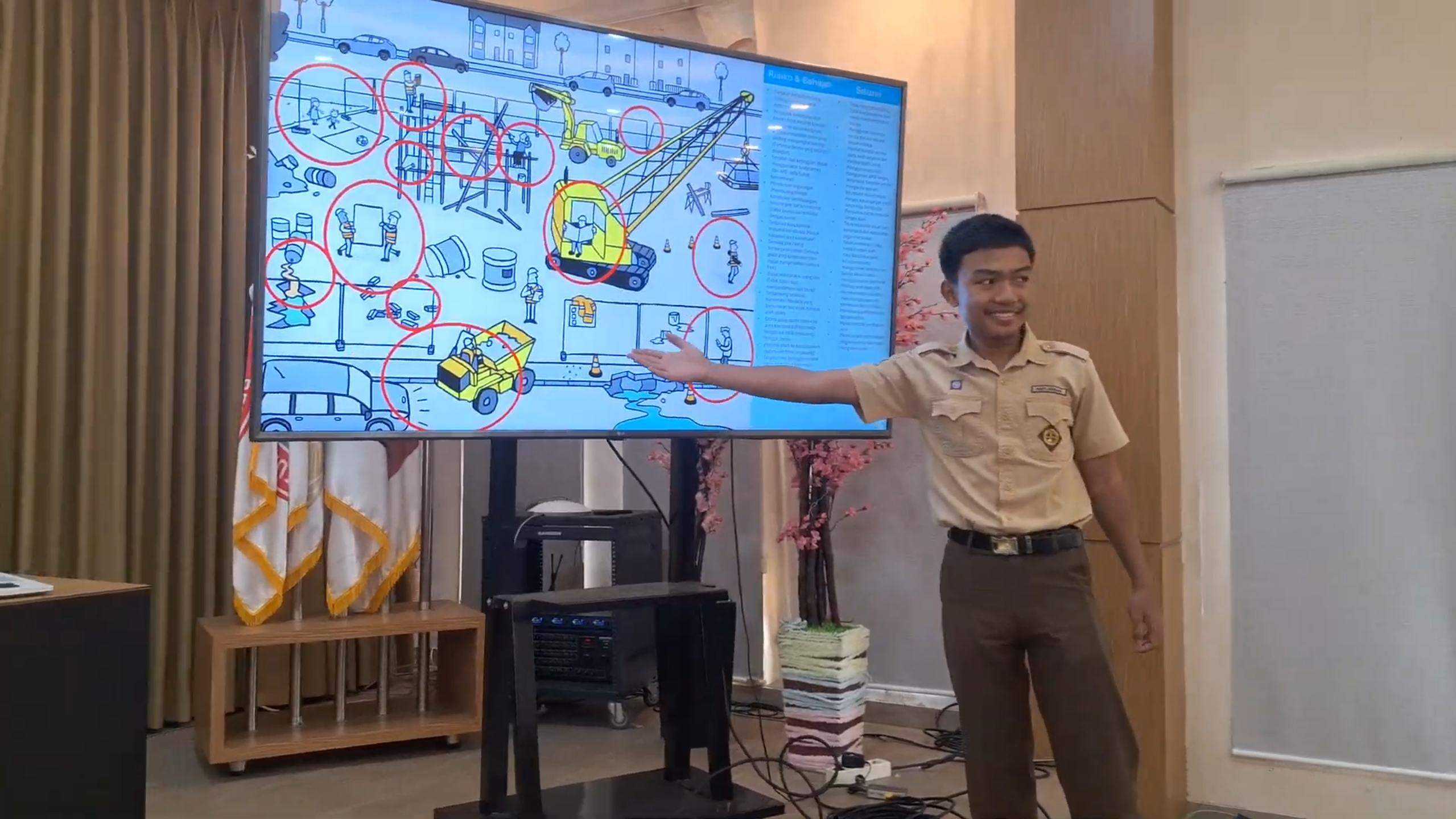
- Day Three: The highlight session—Hazard Identification Game Simulation, where students were required to identify and mark potential OHS risks within a 3D building model.
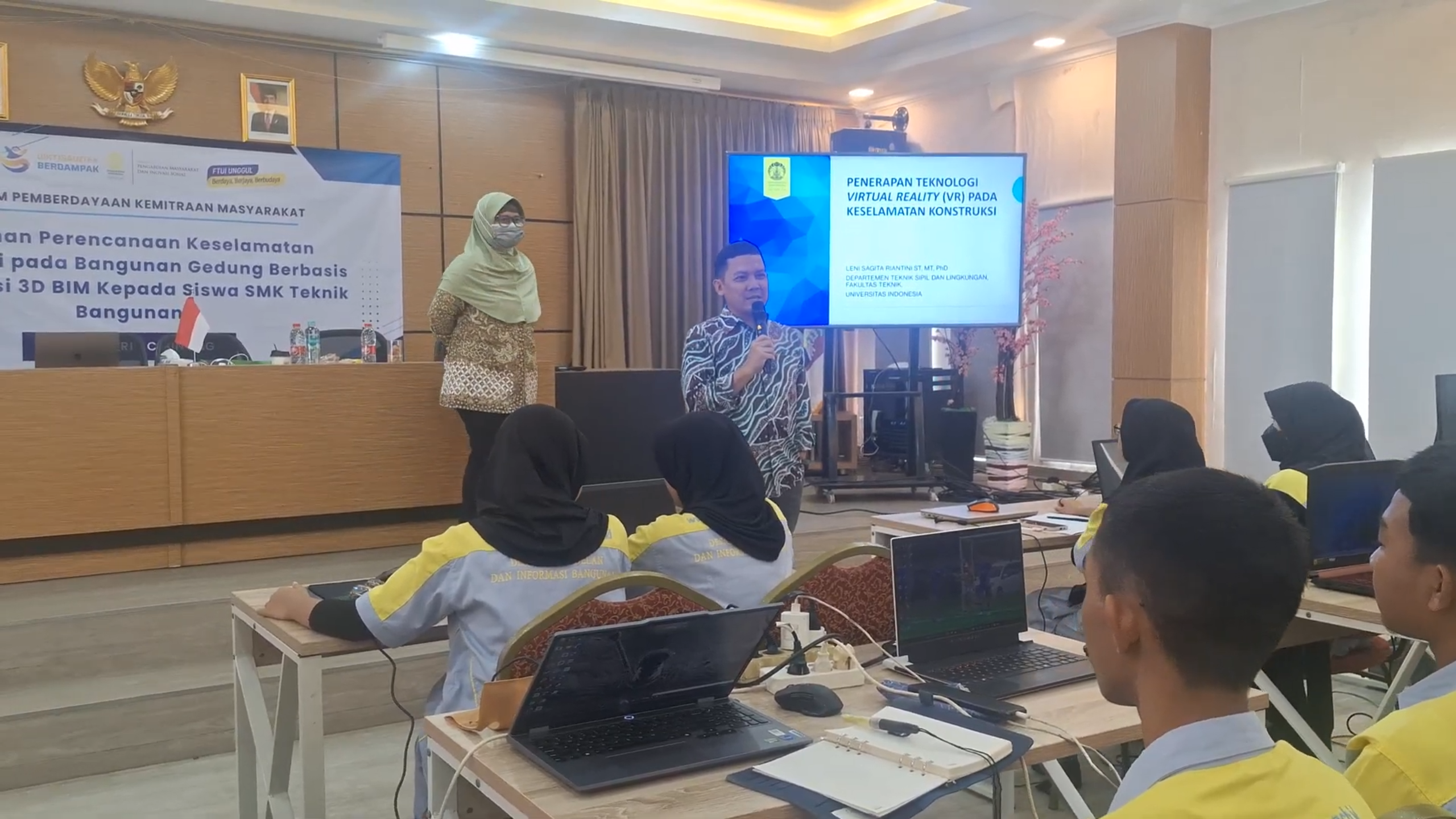
Team member Leni Sagita Riantini, S.T., M.T., Ph.D., emphasized that the game-based method effectively reduces students’ cognitive load. “In the simulation, students must detect 8 to 10 critical hazard points. This is far more impactful than simply memorizing regulations. They develop episodic memory related to safety,” she explained.
Technical challenges, such as differences in software versions across laboratory computers, were addressed through innovative solutions developed by the UI team. Dr. Ir. Kemala Hayati, S.T., M.T., another team member from FTUI, elaborated:
“We deliberately designed a Legacy-Compatible Project Template that is lightweight yet compliant with industry standards. As a result, 100% of students were able to complete the initial setup without encountering obstacles, and 90% of participants successfully created a complete 3D model and valid construction drawings within a short time. This demonstrates that standardization is the key to efficiency,” said Dr. Kemala
Measurable Competency Improvement
Program evaluation results indicated significant improvements in both cognitive and psychomotor domains. Students’ knowledge scores in OHS and BIM increased from an average of 24.25 to 28.83 (on a 30-point scale).
This community engagement program also produced tangible outputs in the form of a BIM–OHS Teaching Module and Digital Standard Operating Procedures (SOPs), which were officially handed over to SMKN 1 Cibinong. This ensures the sustainability of independent training in the future and supports the Link and Match policy between vocational education and industry.
In addition, the UI implementation team enhanced these outputs by donating one unit of Virtual Reality (VR) technology on 19 December 2025. The VR unit, installed with BIM–OHS applications, functions as an immersive 3D model visualization tool, enabling students to conduct virtual walkthrough simulations to identify potential OHS hazards with a higher level of realism. This initiative aims to further strengthen students’ competencies in analyzing construction safety in the future.
***
Public Communication Office
Faculty of Engineering, Universitas Indonesia