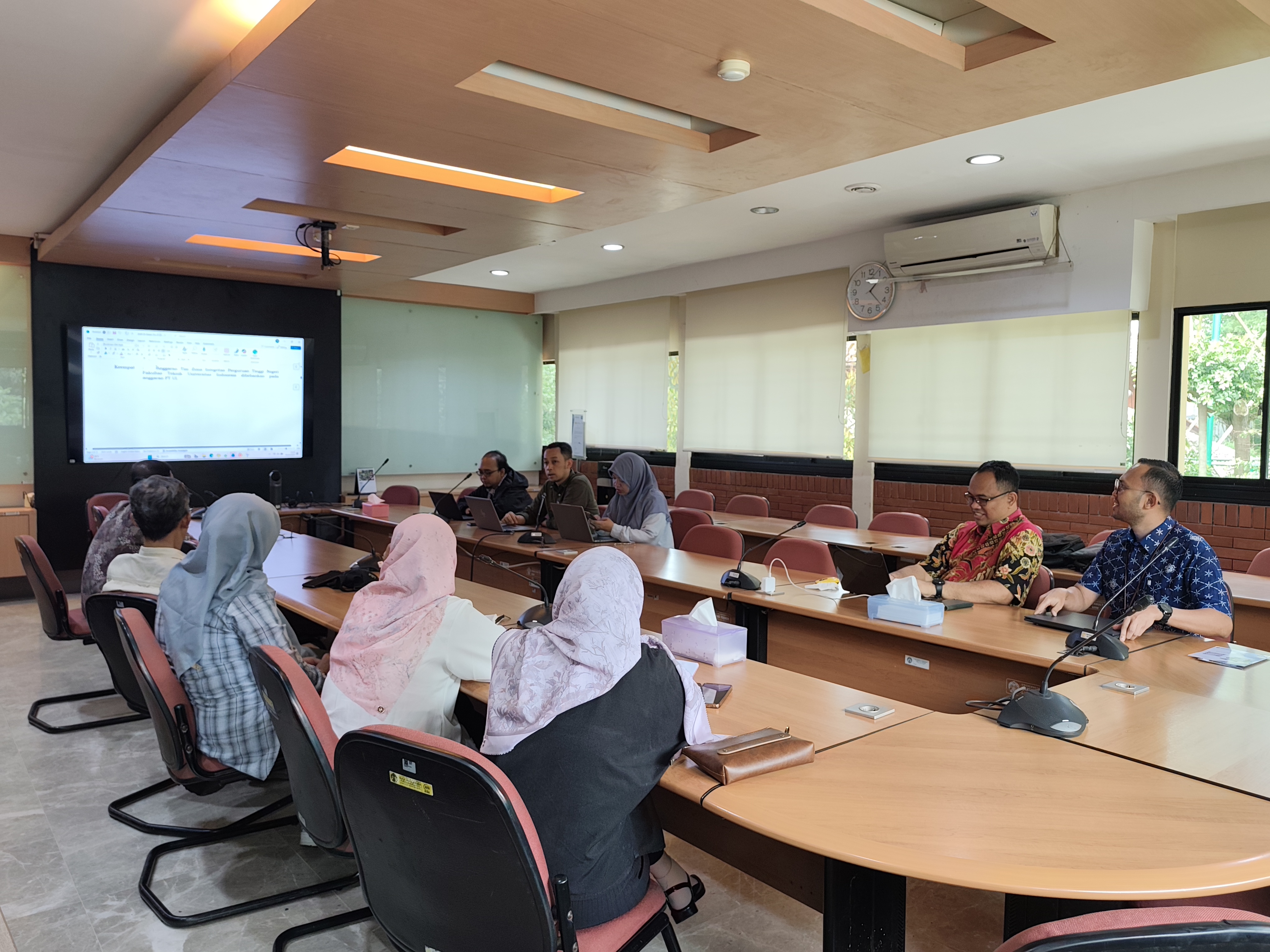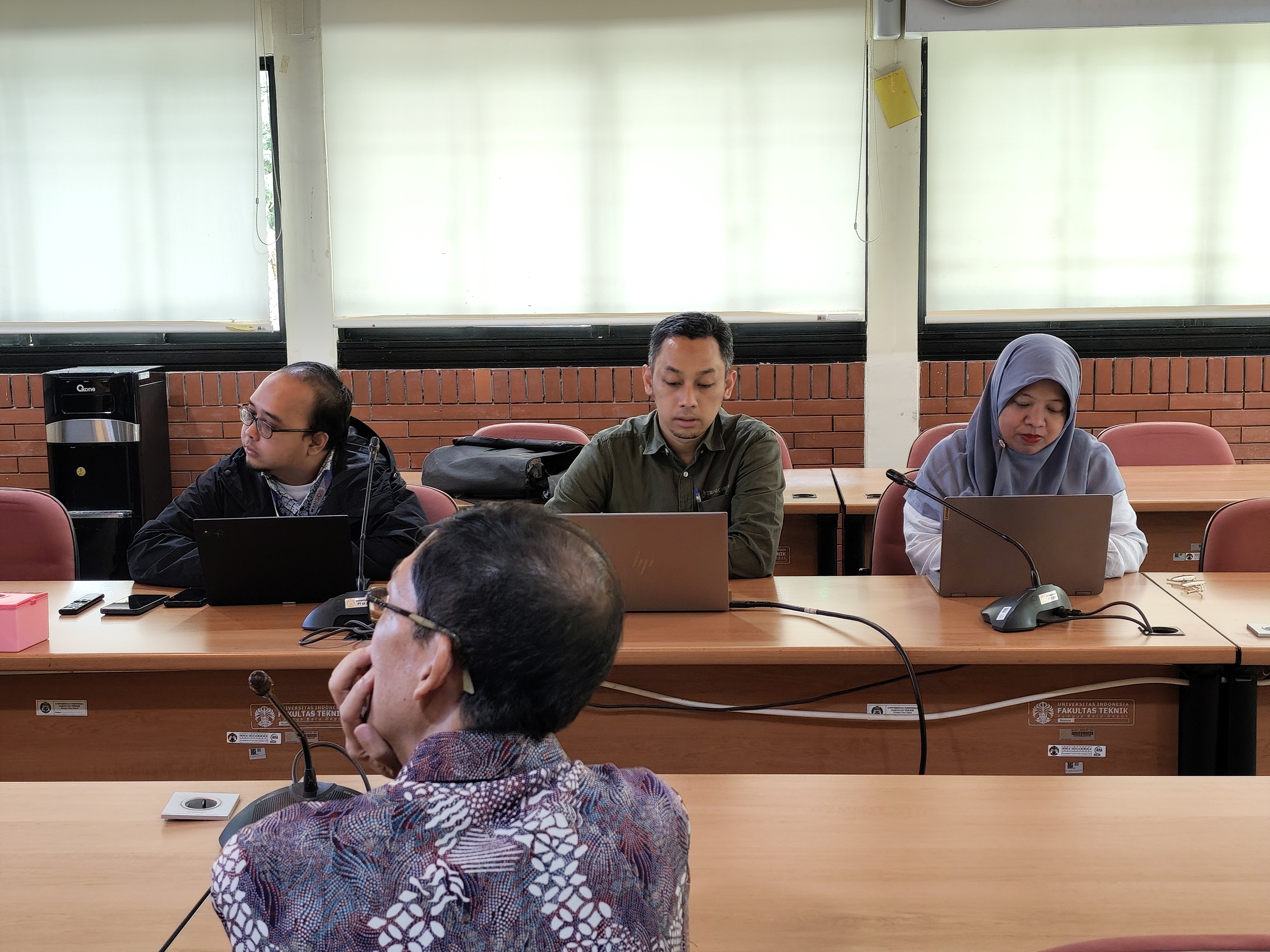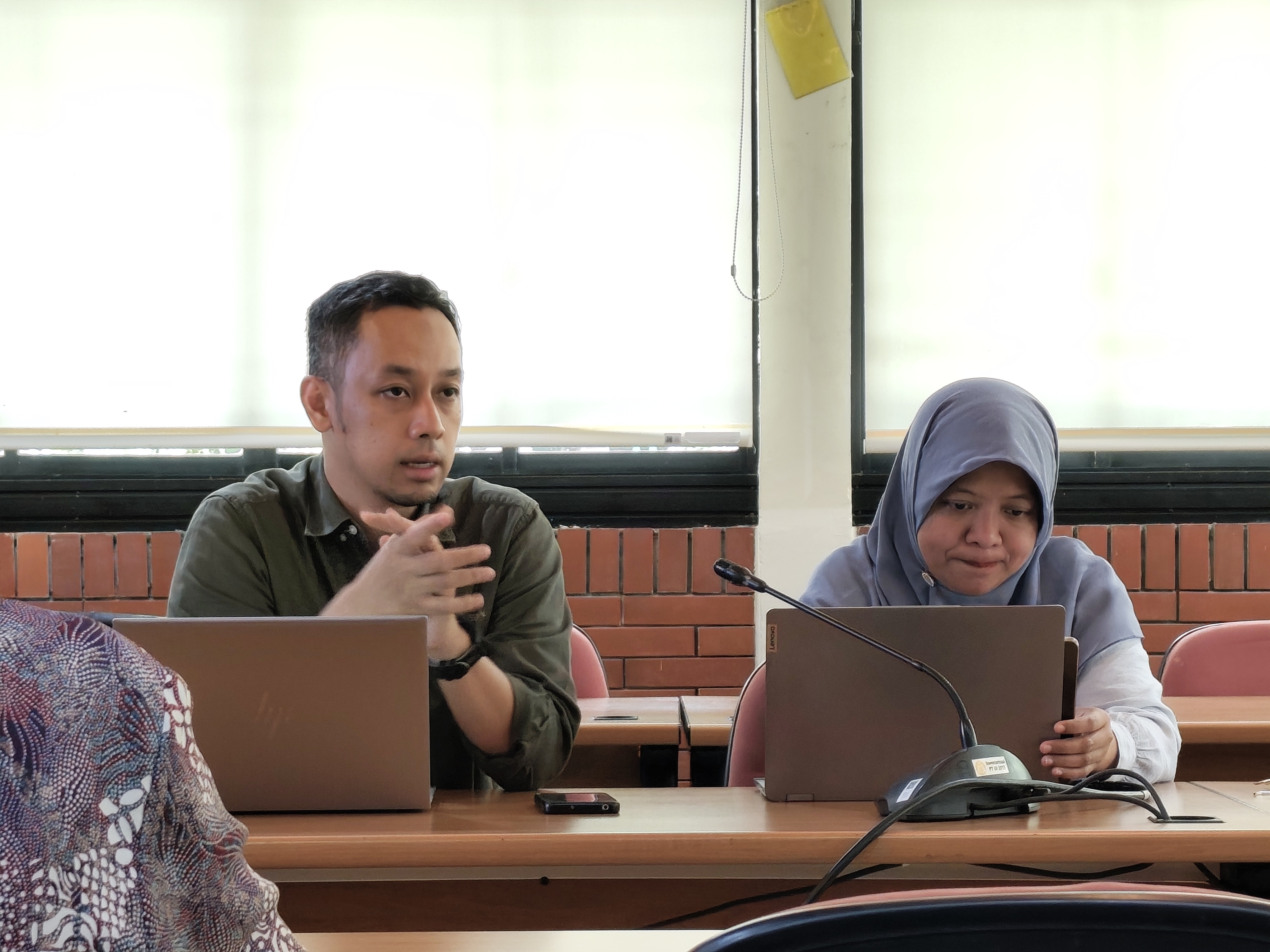
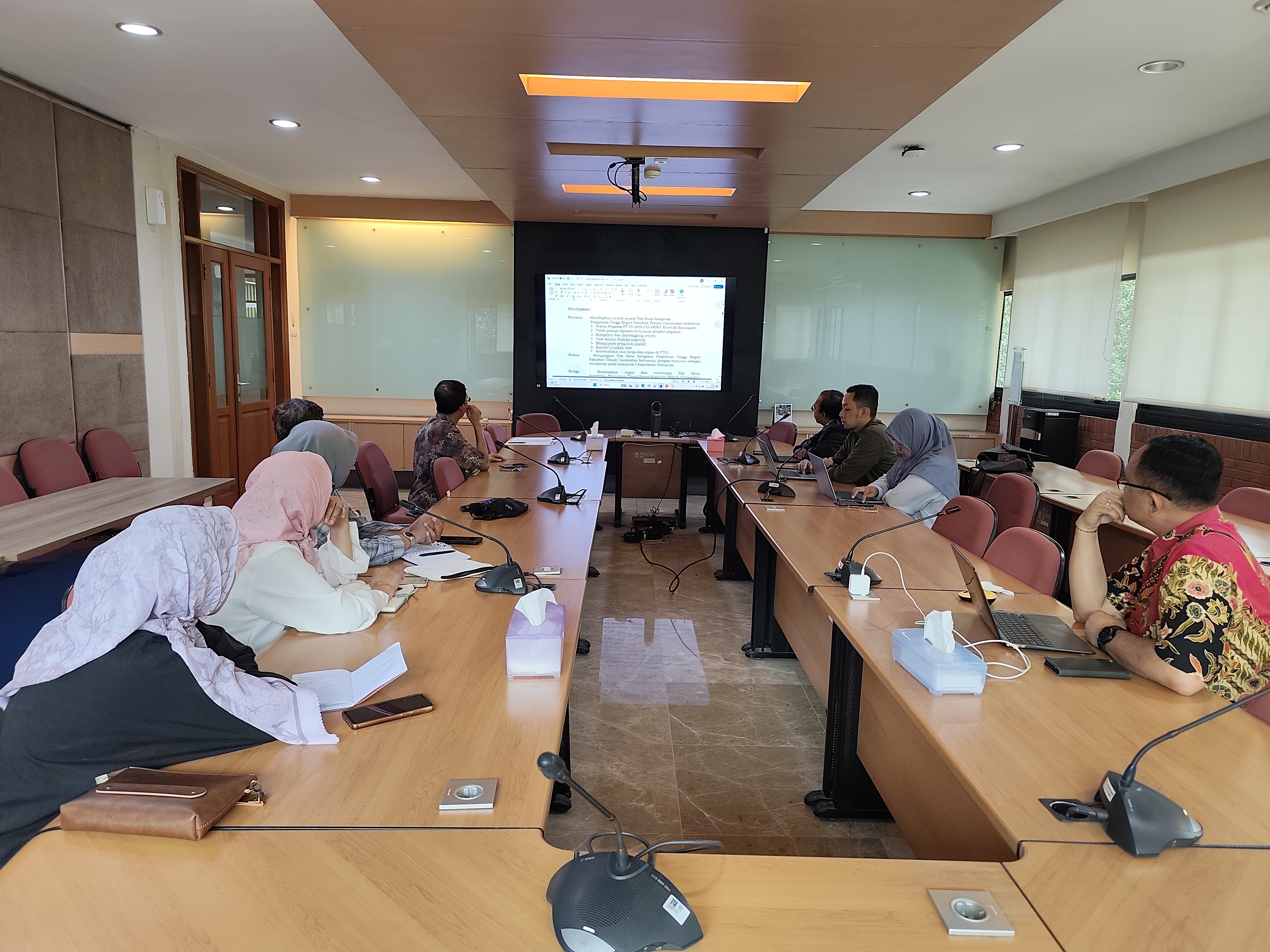
The Integrity Zone (ZI) Lever Team 1 of the Faculty of Engineering at Universitas Indonesia (FTUI) held its regular coordination meeting on Tuesday, March 3, 2026, at the Senate Meeting Room, Dean’s Office Building of FTUI. This meeting is part of a periodic agenda aimed at implementing the Bureaucratic Reform program, particularly Lever 1: Change Management, which serves as a key foundation for strengthening the development of the Integrity Zone within the faculty.
The meeting was chaired by Dr. Eng. Radon Dhelika, B.Eng., M.Eng., Coordinator of Lever 1 of the FTUI Integrity Zone and Head of the Planning, Performance Monitoring, and Education Modernization Unit. A key discussion point during the meeting was the establishment of the FTUI Integrity Zone Team involving Change Agents from both academic staff and education personnel. The involvement of representatives from various groups is intended to foster collaboration, strengthen commitment to clean and accountable governance, and enhance the effectiveness of the Integrity Zone program implementation across all working units.
In addition to the formation of the team, the meeting also outlined the duties and responsibilities of the FTUI Integrity Zone Team, which include preparing and overseeing the Integrity Zone development action plan, coordinating the fulfillment of evidence and assessment indicators, conducting monitoring and evaluation, and reporting progress periodically to the faculty leadership.
During the presentation on strengthening the Integrity Zone program, the team also reviewed the progress of implementation across the six key components, namely change management, business process arrangement, human resource management system improvement, strengthening accountability, strengthening supervision, and improving the quality of public services. Various initiatives have been continuously implemented, including the application of the Nine Core Values of Universitas Indonesia, service digitalization, development and updating of standard operating procedures, strengthening risk management, optimizing the Whistleblowing System, and conducting public satisfaction surveys.
The Dean of the Faculty of Engineering at Universitas Indonesia, Prof. Kemas Ridwan Kurniawan, S.T., M.Sc., Ph.D., emphasized that the development of the Integrity Zone is not merely an administrative requirement, but a transformation of work culture.
“The Integrity Zone should be understood as a movement for change that influences the mindset and behavior of the entire academic community. Our commitment is to build governance that is transparent, accountable, and service-oriented as a foundation toward achieving a Corruption-Free Area and a Clean and Serving Bureaucracy,” he stated.
Meanwhile, Radon Dhelika noted that the focus for 2026 will be on strengthening the active participation of lecturers and education personnel as agents of change.
“Our challenge is not only the completeness of documentation but also increasing understanding and internalizing the values of integrity. More concise, visual, digital-based, and communicative approaches need to be developed so that the message of the Integrity Zone can be effectively received, including by students,” he explained.
During the discussion session, the team also highlighted the importance of involving the MPKT FT in strengthening the understanding and implementation of the Nine Core Values of Universitas Indonesia, refining regulations and authority boundaries, involving HR Coordinators at the department level, and reviewing the Lecturer Performance Workload (BKD) as part of strengthening lecturer performance accountability. The meeting also discussed strengthening the role and legitimacy of Change Agents in promoting a culture of integrity within FTUI.
As follow-up actions, the meeting agreed on the finalization of the FTUI Integrity Zone Team structure with proportional representation, improvement of digital-based socialization materials, preparation of a more structured and measurable 2026 work timeline, and scheduling further coordination meetings to ensure that all plans are implemented according to target.
Through these initiatives, FTUI reaffirms its commitment to continuously strengthening the development of the Integrity Zone as part of sustainable bureaucratic reform, while fostering clean, professional, and service-oriented governance within the faculty.
***
Public Communication Office
Faculty of Engineering Universitas Indonesia