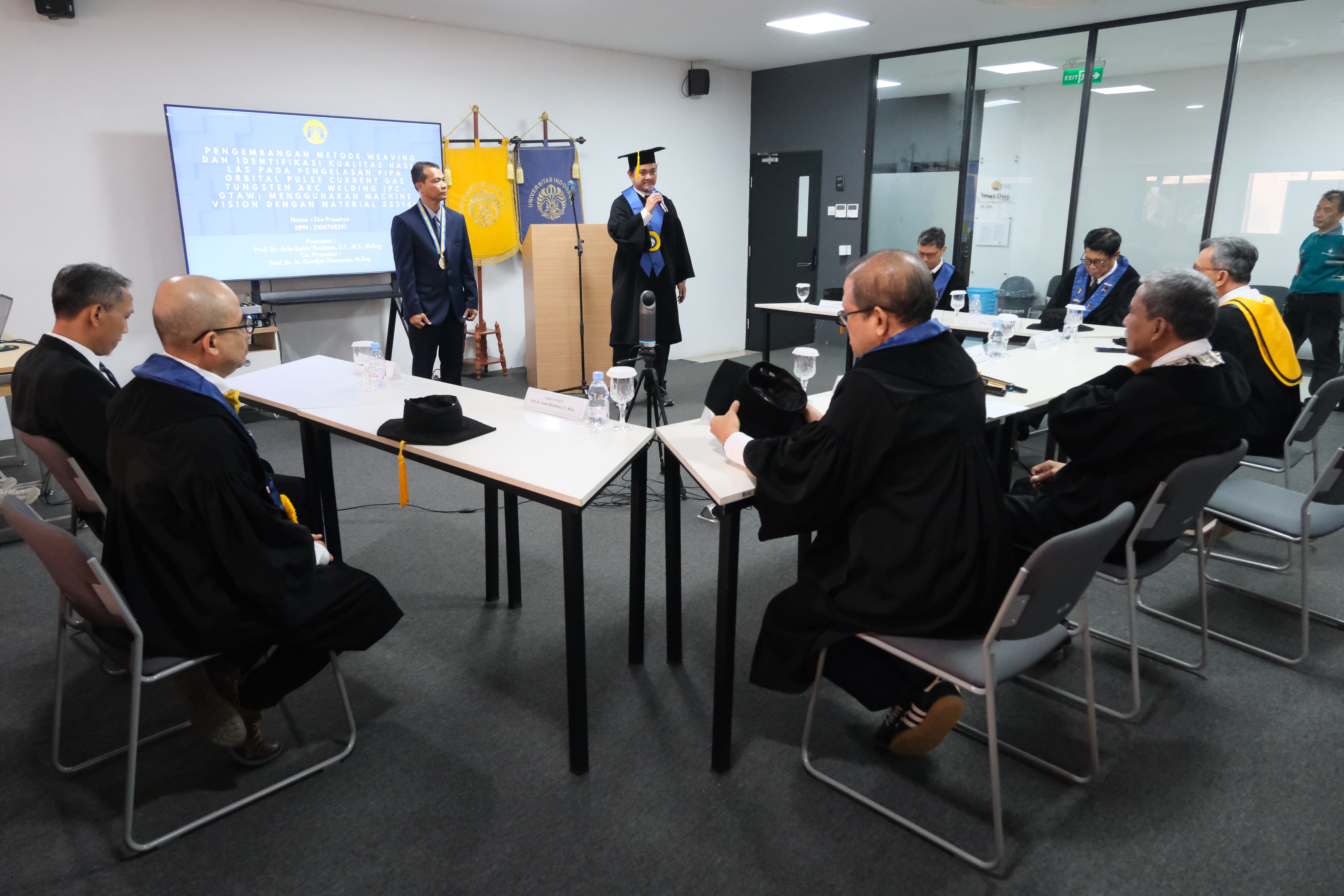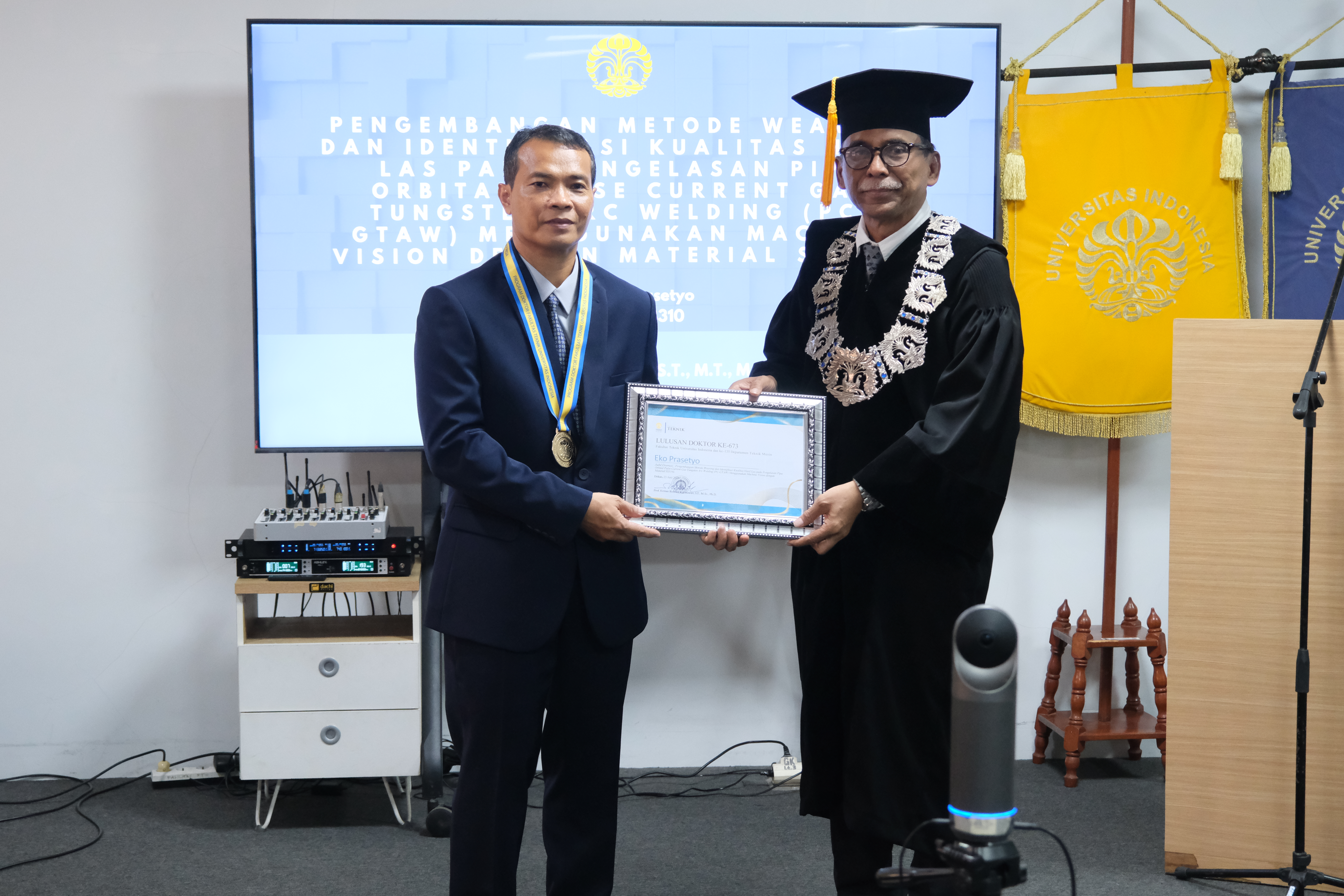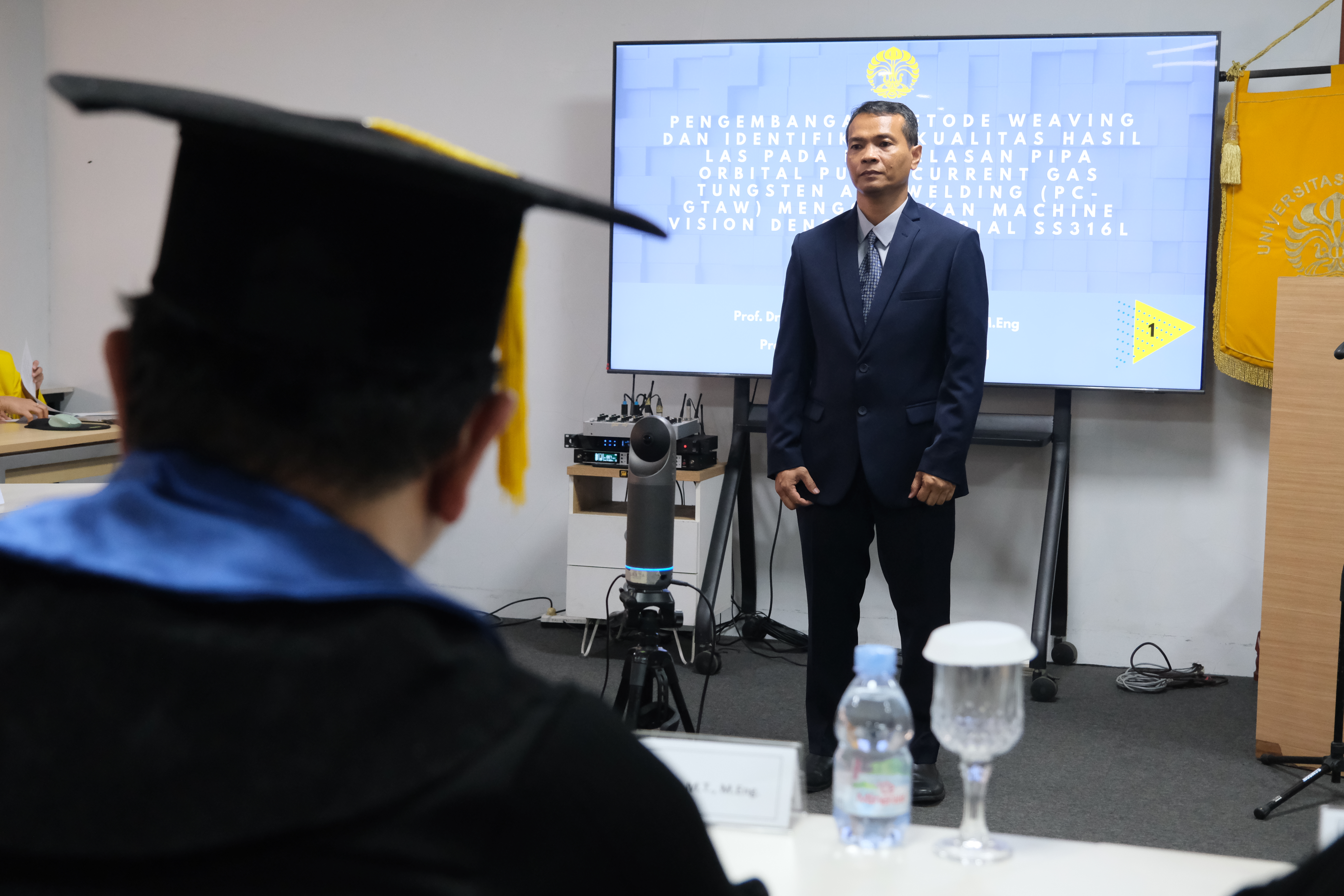

The Faculty of Engineering, Universitas Indonesia (FTUI), has achieved another academic milestone with the graduation of Eko Prasetyo, a doctoral student from the Department of Mechanical Engineering. Eko completed his doctoral studies with a Grade Point Average (GPA) of 3.98 and graduated with the distinction of Summa Cum Laude. He officially became the 135th doctoral graduate of the Department of Mechanical Engineering and the 673rd doctoral graduate of FTUI after successfully defending his dissertation entitled “Development of a Weaving Method and Weld Quality Identification in Orbital Pulse Current Gas Tungsten Arc Welding (PC-GTAW) of SS316L Pipes Using Machine Vision.”
The research integrates orbital welding techniques with automated visual inspection technology (Machine Vision) using SS316L stainless steel. The study was designed to support precision automation in pipeline joining systems across various strategic industries. It addresses a critical domestic challenge by reducing Indonesia’s reliance on highly skilled, specially certified manual welders while minimizing the risk of welding defects commonly associated with conventional welding methods.
“Pipeline welding in industries such as oil and gas refineries, power plants, nuclear facilities, pharmaceutical manufacturing, and chemical processing requires exceptional mechanical strength and absolute leak-free performance. Until now, orbital welding in difficult positions has relied heavily on operator expertise and has been affected by unstable weld penetration caused by gravity acting on the molten weld pool. When defects occur inside the pipe, conventional inspection methods require considerable time and cost, with defects often detected only after the welding process has been completed,” explained Eko.
To address these challenges, Eko developed a weaving welding method integrated into an automated Pulse Current Gas Tungsten Arc Welding (PC-GTAW) orbital welding system. The innovation incorporates Machine Vision technology using an industrial-grade camera as an intelligent, real-time, inline inspection system. The camera continuously captures the geometry of the weld pool and the welding path during the welding process. The computer vision algorithm developed in this research analyzes these visual characteristics to identify, classify, and detect welding defects—such as incomplete penetration, porosity, and discontinuities—as well as pipe ovality parameters without waiting for the entire welding process to be completed.
The successful implementation of this research is expected to accelerate the adoption of more efficient automated welding technologies within Indonesia’s heavy manufacturing sector and strategic national projects. From an occupational safety perspective, the automated inspection technology also helps reduce the risk of high-pressure pipeline failures while improving the standardization of domestic manufacturing quality.
The weaving method and visual welding control system were validated through quantitative testing, demonstrating that the optimized orbital welding parameters consistently maintained welding arc stability and weld penetration geometry in SS316L materials throughout the full 360-degree circumference of the pipe. Furthermore, the developed digital image recognition algorithm enabled the Machine Vision system to identify welding defects with high accuracy while significantly reducing inspection time through automated analysis directly from the operator’s control station.
Dean of the Faculty of Engineering, Universitas Indonesia, Prof. Kemas Ridwan Kurniawan, S.T., M.Sc., Ph.D., expressed his appreciation for the research findings. He stated that this cutting-edge research demonstrates FTUI’s commitment to delivering technological solutions that directly contribute to strengthening the independence of Indonesia’s industrial sector.
“The integration of physical manufacturing engineering with artificial intelligence represents a tangible example of modern innovation that can enhance global competitiveness while accelerating the readiness of domestic industries to face the era of digital transformation,” said Prof. Kemas.
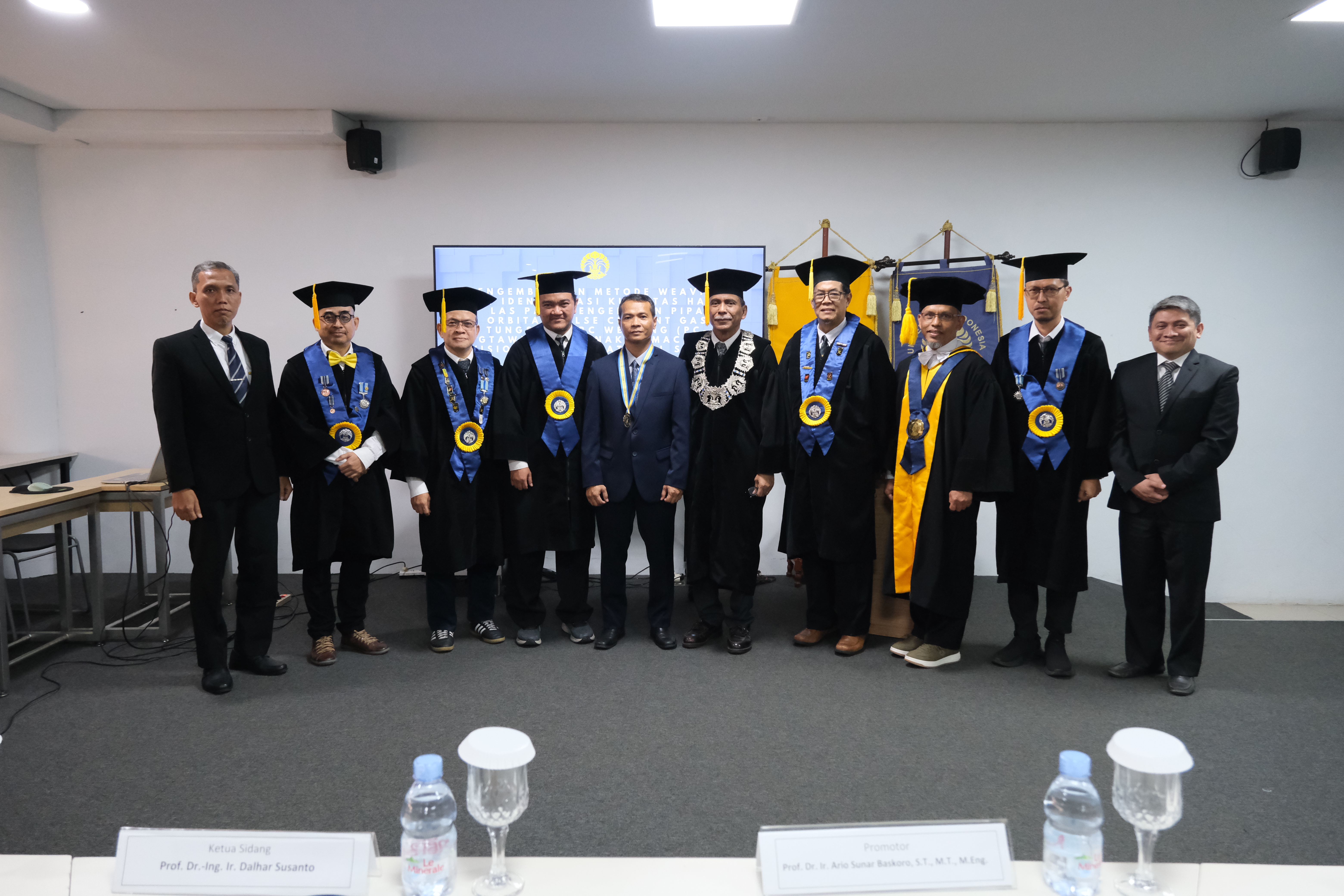
The research findings were presented during the public doctoral defense held on 24 June 2026 at the Smart Classroom, 3rd Floor, GK Building, FTUI. The defense session was chaired by Prof. Dr.-Ing. Ir. Dalhar Susanto, with Prof. Dr. Ir. Ario Sunar Baskoro, S.T., M.T., M.Eng. serving as the principal supervisor and Prof. Dr. Ir. Gandjar Kiswanto, M.Eng. as co-supervisor. The examination committee consisted of Prof. Dr. Ir. Triyono, S.T., M.T. from Universitas Sebelas Maret (UNS), Surakarta, along with FTUI faculty members Prof. Dr. Ir. Winarto, M.Sc.; Prof. Sugeng Supriadi, S.T., M.S.Eng., Ph.D.; Prof. Dr. Yudan Whulanza, S.T., M.Sc.; and Jos Istiyanto, S.T., M.T., Ph.D.
Through this achievement, FTUI once again demonstrates its contribution to advancing cutting-edge engineering research that responds to the growing demands of industrial automation and supports the future development of Indonesia’s manufacturing sector.
***
Public Communications Office
Faculty of Engineering, Universitas Indonesia