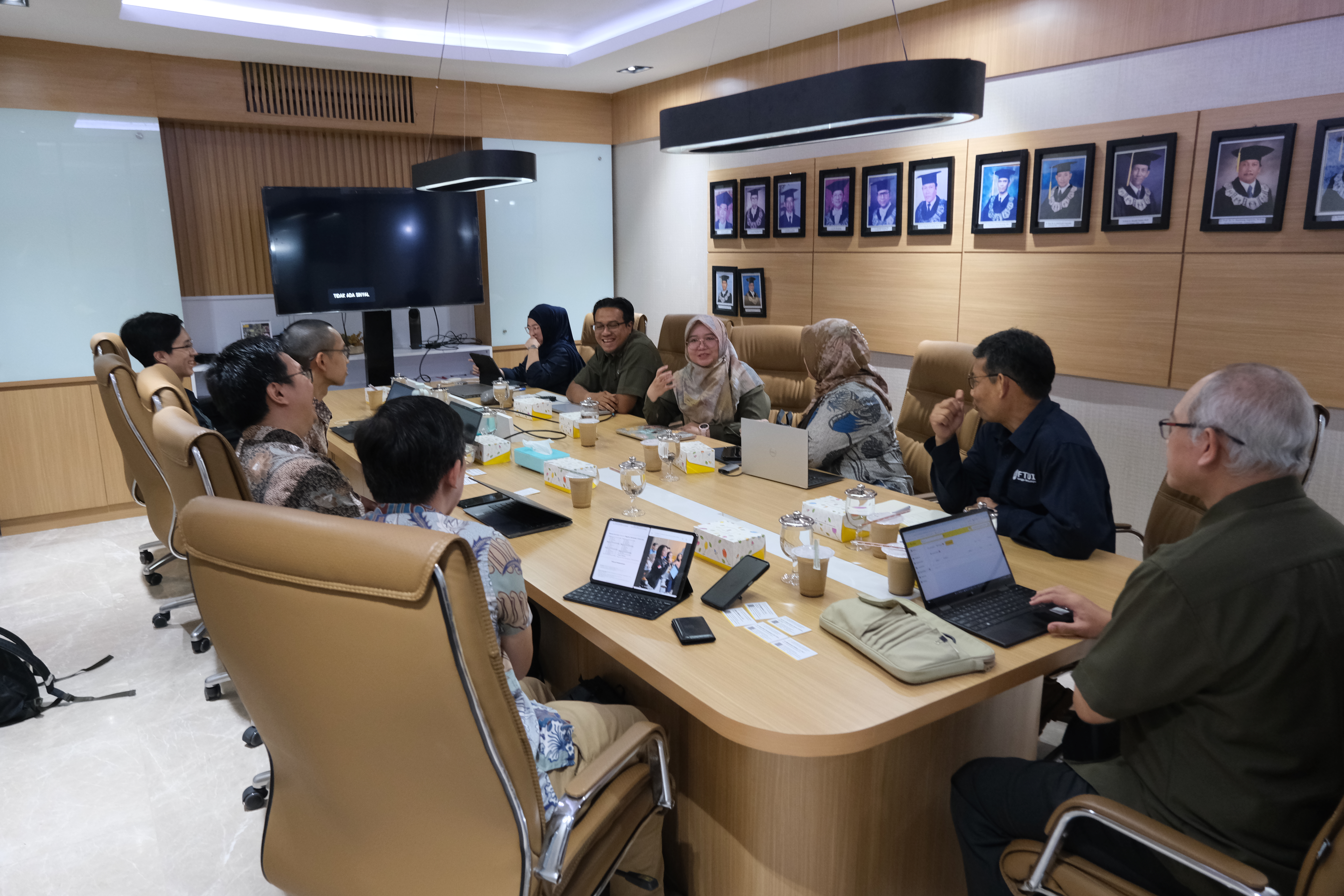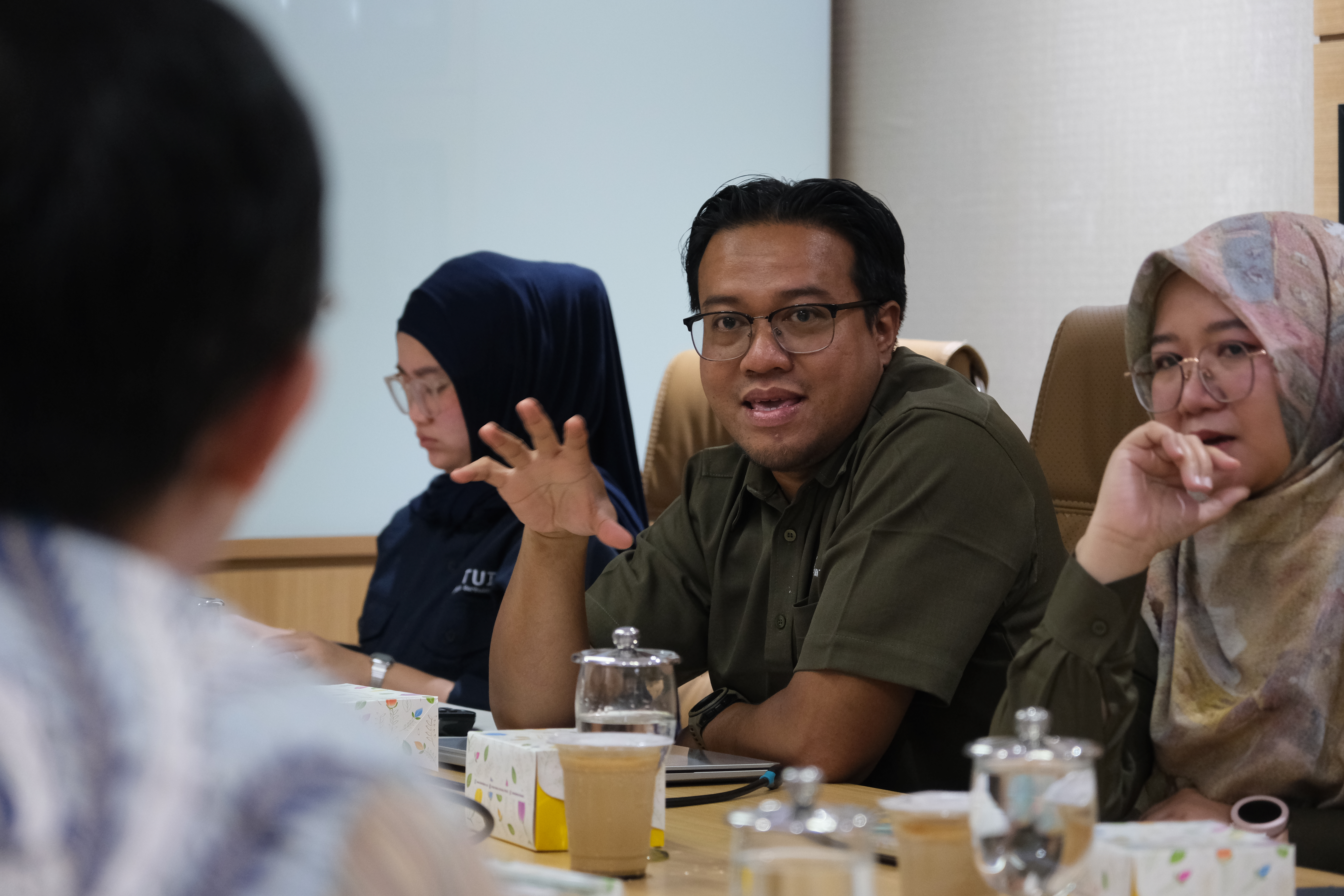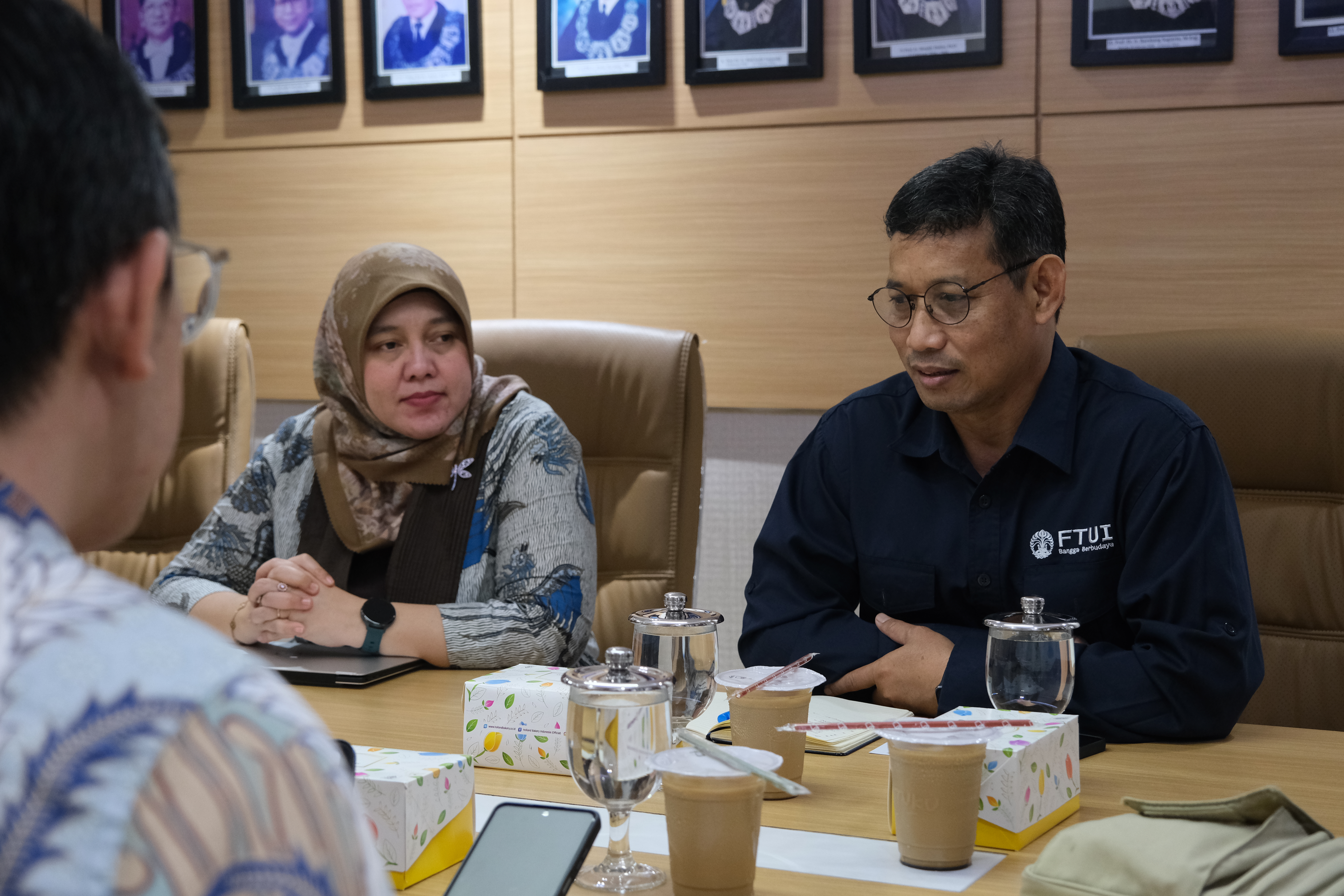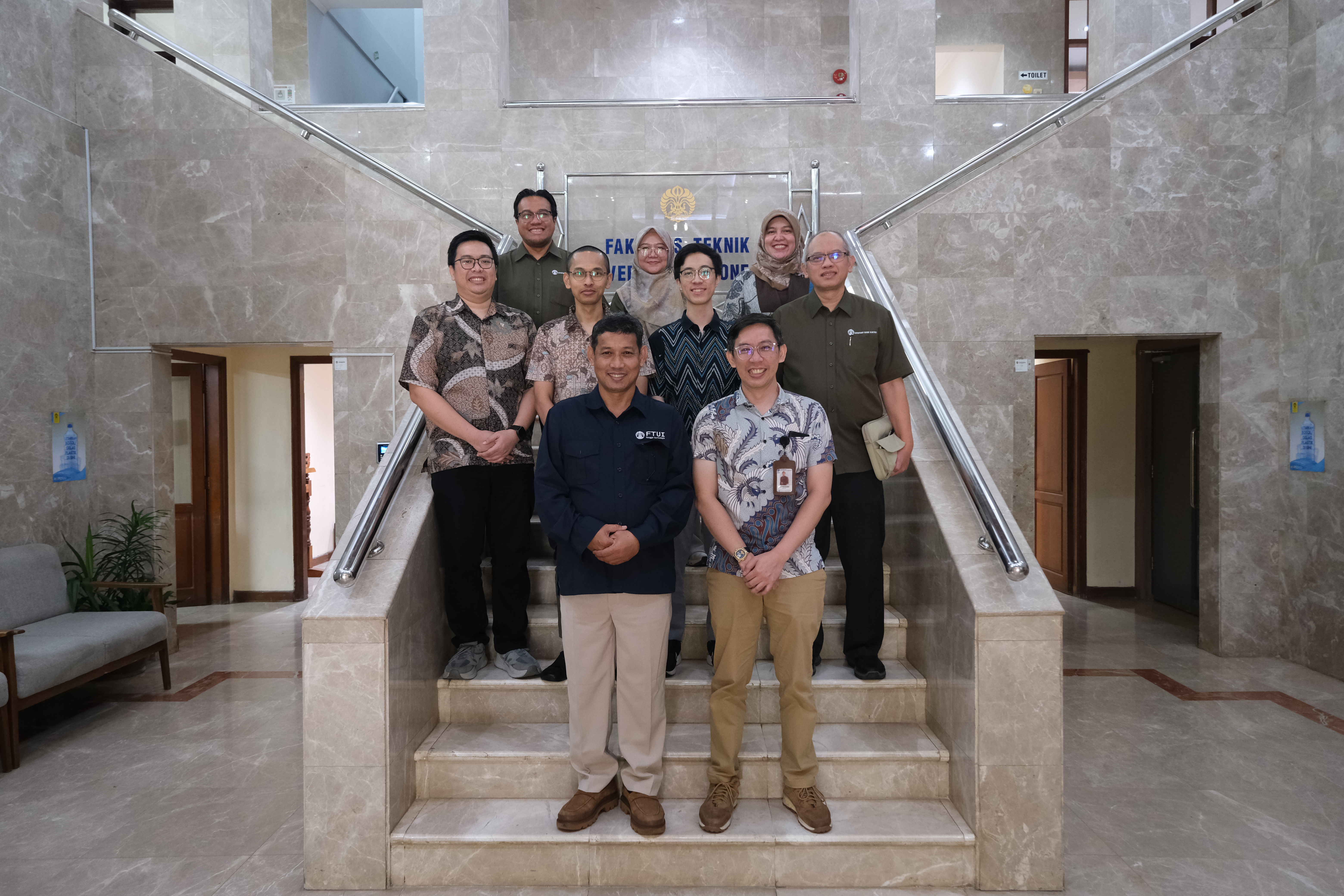
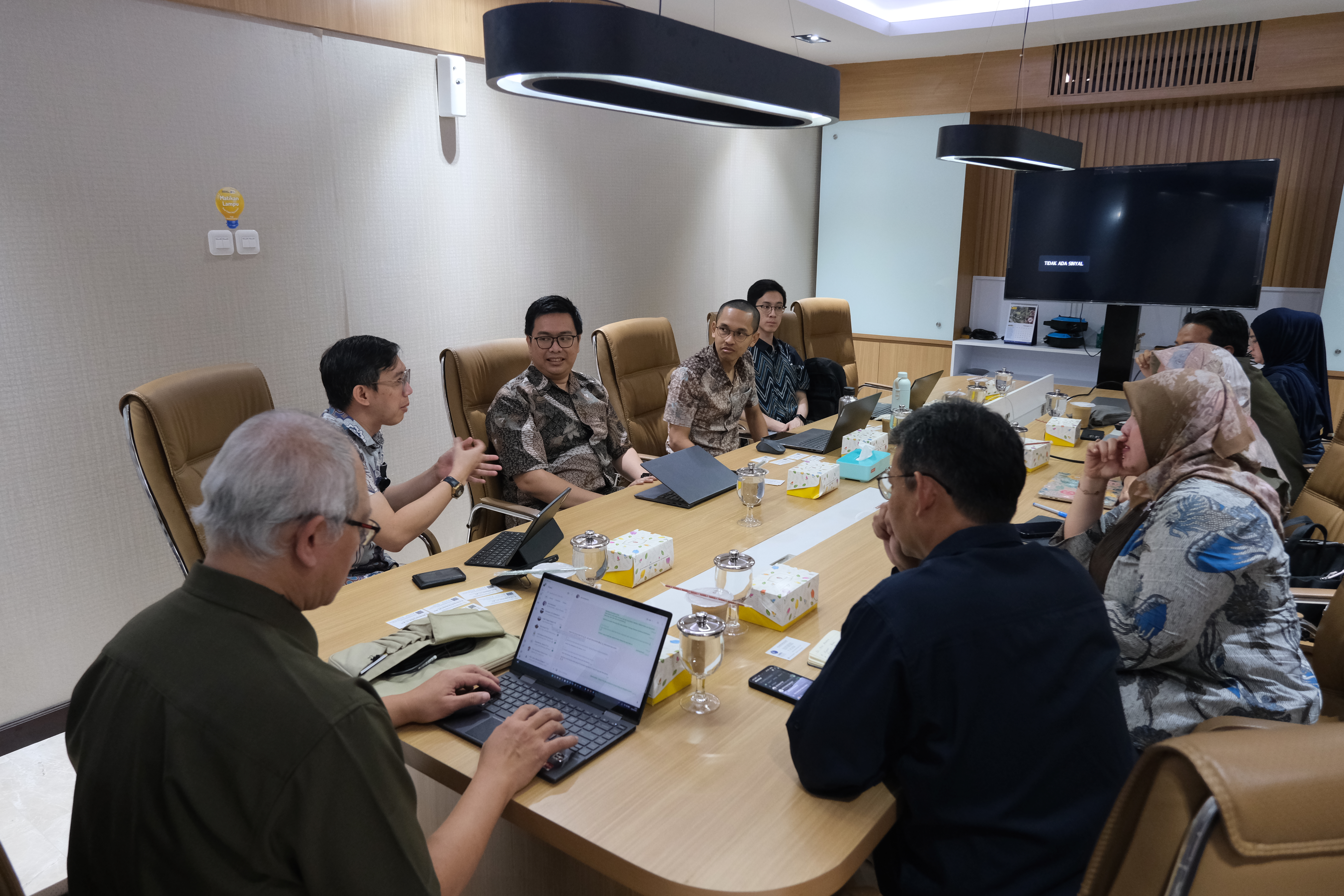
The Faculty of Engineering, Universitas Indonesia (FTUI) continues to expand its strategic collaboration network with national higher education institutions. One of the latest initiatives is the exploration of cooperation between FTUI and Universitas Multimedia Nusantara (UMN), particularly in the field of Electrical Engineering. The meeting, attended by leaders from both institutions, discussed several academic collaboration opportunities, focusing on the development of a Fastrack program from UMN’s Bachelor’s (S1) to FTUI’s Master’s (S2) program, as well as Joint Degree and Double Degree options. The meeting was held at the Leadership Meeting Room, Dean’s Office Building, FTUI, on Wednesday (18/2).
Representing FTUI, Akhmad Herman Yuwono, Vice Dean for Education, Research, and Student Affairs, opened the discussion by highlighting potential collaboration in Electrical Engineering and Computer Engineering, particularly through the Fastrack scheme. The Dean of the Faculty of Engineering at Universitas Multimedia Nusantara, Niki Prastomo, expressed UMN’s strong interest in the Fastrack program, which would enable UMN undergraduate students to continue their master’s studies at FTUI through an accelerated pathway.
The proposed scheme includes a regular undergraduate study pattern at UMN from semesters 1 to 5, an internship in semester 6, elective courses in semester 7, and a final project in semester 8. To support the Fastrack progression to FTUI’s master’s program, curriculum adjustments and course alignment would be required, particularly if developed as a Joint Degree or Double Degree program, with a minimum equivalency of 75%.
UMN emphasized that its distinctive institutional courses would remain part of its academic identity. With an average GPA of 3.4, UMN students are considered competitively positioned for the accelerated pathway, although a minimum GPA requirement—such as 3.5, in line with FTUI’s internal Fastrack standards—may be established.
During the discussion, Aji Nur Widyanto presented FTUI’s academic structure under the 2024 Curriculum. At the undergraduate level, there are three study programs, while at the master’s level, there are two study programs (Electrical Engineering with specializations in Electrical Engineering and Biomedical Engineering), as well as one doctoral program in Electrical Engineering. Potential areas for collaboration include Engineering Automation and Data Analytics, as well as Cybersecurity.
As a concrete follow-up, both parties agreed to exchange sample Fastrack program documents and their respective curricula for further review. The Dean of FTUI, Kemas Ridwan Kurniawan, also highlighted the significance of the meeting.
“This exploratory collaboration is expected to open mutually beneficial opportunities, strengthen academic synergy, and provide high-quality accelerated study pathways for students of both institutions. With a strong curricular foundation and shared commitment, we are optimistic about developing innovative educational schemes that are relevant to industry needs and future technological advancements,” he stated.
***
Public Communication Office
Faculty of Engineering Universitas Indonesia