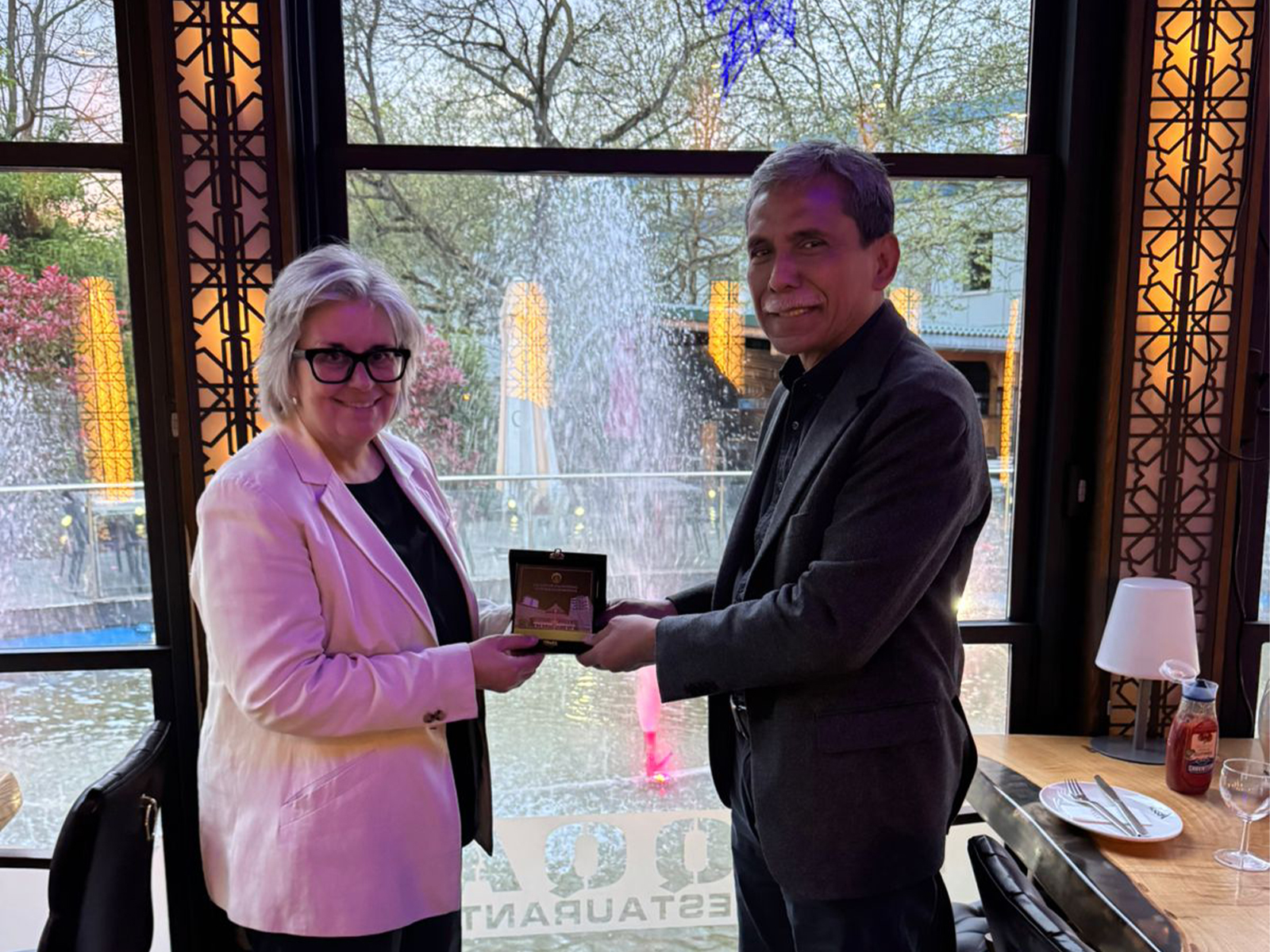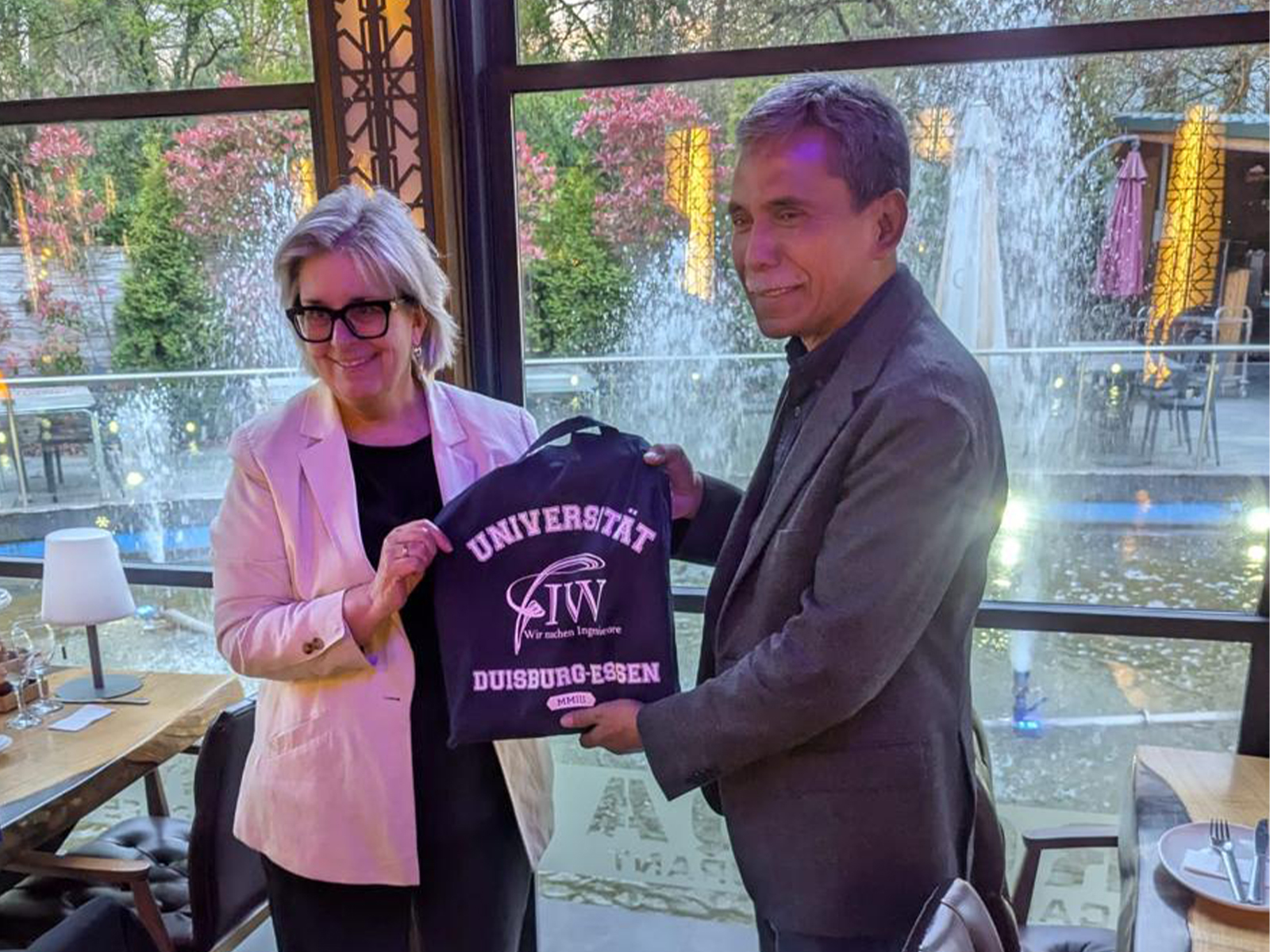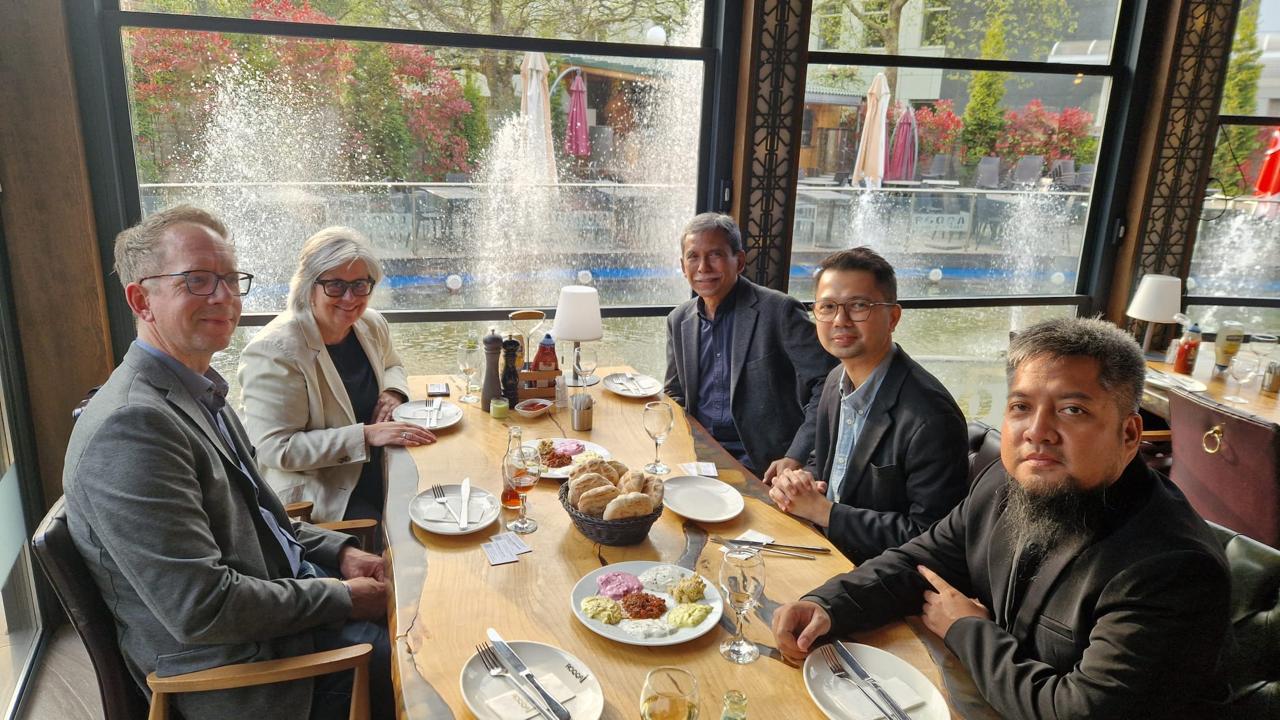

The Faculty of Engineering, Universitas Indonesia (FTUI), continues to strengthen its internationalization strategy through the development of collaboration with Universität Duisburg-Essen (UDE), Germany. This partnership, which has been established for more than 20 years through double degree programs, is now entering a new phase that is more comprehensive and integrated.
This development was highlighted during a strategic visit and discussion held on April 16–17, 2026, at the UDE campus in Germany. The FTUI delegation was represented by Professor Dalhar Susanto, Vice Dean for Resources, Venture, and General Administration, and Ir. Andyka Kusuma, S.T., M.Sc., Ph.D., Manager of Partnership and International Education.
During the meeting, both institutions agreed to expand the undergraduate double degree program into two new fields: Civil Engineering (Structural Engineering) and Mechanical Engineering. In addition, an Agreement of Implementation (AoI) was signed for the student exchange program, alongside discussions on strengthening collaboration in Chemical Engineering through exchange schemes and the development of master’s-level programs.
The curriculum development for the Civil Engineering and Mechanical Engineering double degree programs has reached significant progress, with approximately 80–90 percent completion. Both programs have now entered the academic review stage, with several technical aspects still requiring alignment, such as course sequencing in Civil Engineering and the validation of elective courses in Mechanical Engineering.
Professor Dalhar Susanto emphasized that this collaboration represents a strategic step in preparing globally competitive engineering graduates. “We are not only sending students abroad, but also building a shared learning ecosystem aligned with international standards. This is an important leap forward to ensure that FTUI graduates are ready to compete and contribute on the global stage,” he stated.
One of the main agendas in this collaboration is the exploration of a bi-directional dual master program, an innovative education model that enables students to pursue an integrated pathway from undergraduate to master’s level across two institutions. The proposed scheme follows a 3+1+1+1 structure, or six years of study, allowing students to obtain two bachelor’s degrees and two master’s degrees simultaneously.
From the UDE side, the Dean of the Faculty of Engineering, Professor Alexander Malkwitz, described the strengthened collaboration as a significant milestone in the partnership between the two institutions. “We are proud to develop programs that not only expand student mobility but also create integrated academic pathways relevant to global challenges in engineering,” he said.
Meanwhile, UDE Vice Rector for International Affairs, Professor Karen Shire, highlighted the importance of cross-border collaboration in higher education today. “Partnerships like this demonstrate how universities can jointly design future-ready education models that are inclusive, flexible, and truly global. UI is a strategic partner for us in Southeast Asia,” she remarked.
This program is designed to be bi-directional, creating opportunities for student mobility not only from UI to UDE but also vice versa. Its implementation will be selective and quota-based, with academic pathway commitments starting from the fourth year, and enabling parallel enrollment schemes at both universities.
In addition to program development discussions, the visit also included monitoring and evaluation sessions of the ongoing FTUI–UDE joint degree programs to ensure sustained academic quality and effective implementation.
The Universität Duisburg-Essen delegation attending the meeting included Professor Karen Shire, Ph.D. (Vice Rector for University Culture, Diversity & International Affairs), Professor Dr.-Ing. Alexander Malkwitz (Dean), Professor Dr.-Ing. Tobias Bruckmann (Commission for International Affairs), as well as Dr.-Ing. Stefan Werner, Dr.-Ing. Frank Schwarz, Bjorn Ciemskin, and Rade Sazdovski.
Moving forward, both institutions will continue finalizing the curriculum, developing academic and legal implementation frameworks, and planning student capacity for international mobility programs. Follow-up academic visits are also planned to accelerate program realization, particularly in the field of Mechanical Engineering.
Through this collaboration, UI and UDE reaffirm their shared commitment to delivering innovative, integrated engineering education that is relevant to global needs, while producing graduates who are excellent and internationally competitive.
***
Public Communication Office
Faculty of Engineering Universitas Indonesia